
SHG’s Youth Artivists at May Day 2026
Self Help Graphics & Art (SHG) and the Eastside LEADS coalition are eager to introduce our 2026 Youth Artivism Internship cohort to our wider community! At the start of April, we welcomed three new artivists to our program: Maya Garcia-Luis (She/Her), Keiko Utsumi (They/Them), and Tony Valentino (He/Him).
Throughout their 9-month internship, our artivists will work collaboratively to create unique art projects, activations, and/or exhibitions that are directly addressing the priorities uplifted by the Eastside LEADS coalition and its membership–made up of local residents. Since 2020, our Youth Artivists have played an important role in leveraging the power of youth voices, culture, and art to advance housing justice through a social housing lens.
Read more about the 2026 Youth Artivist Internship Cohort’s experience so far below!
THE FIRST MONTH OF THE INTERNSHIP
Our 2026 Youth Artivists hit the ground running: beginning the 2nd week of their internship by attending the monthly Eastside LEADS coalition membership meeting. Here, our youth were able to meet some of our community resident leaders and representatives from the partner organizations composing the coalition. During the span of their internship, our artivistas will continue to attend these meetings and other coalition activities to inform the development of their project(s).
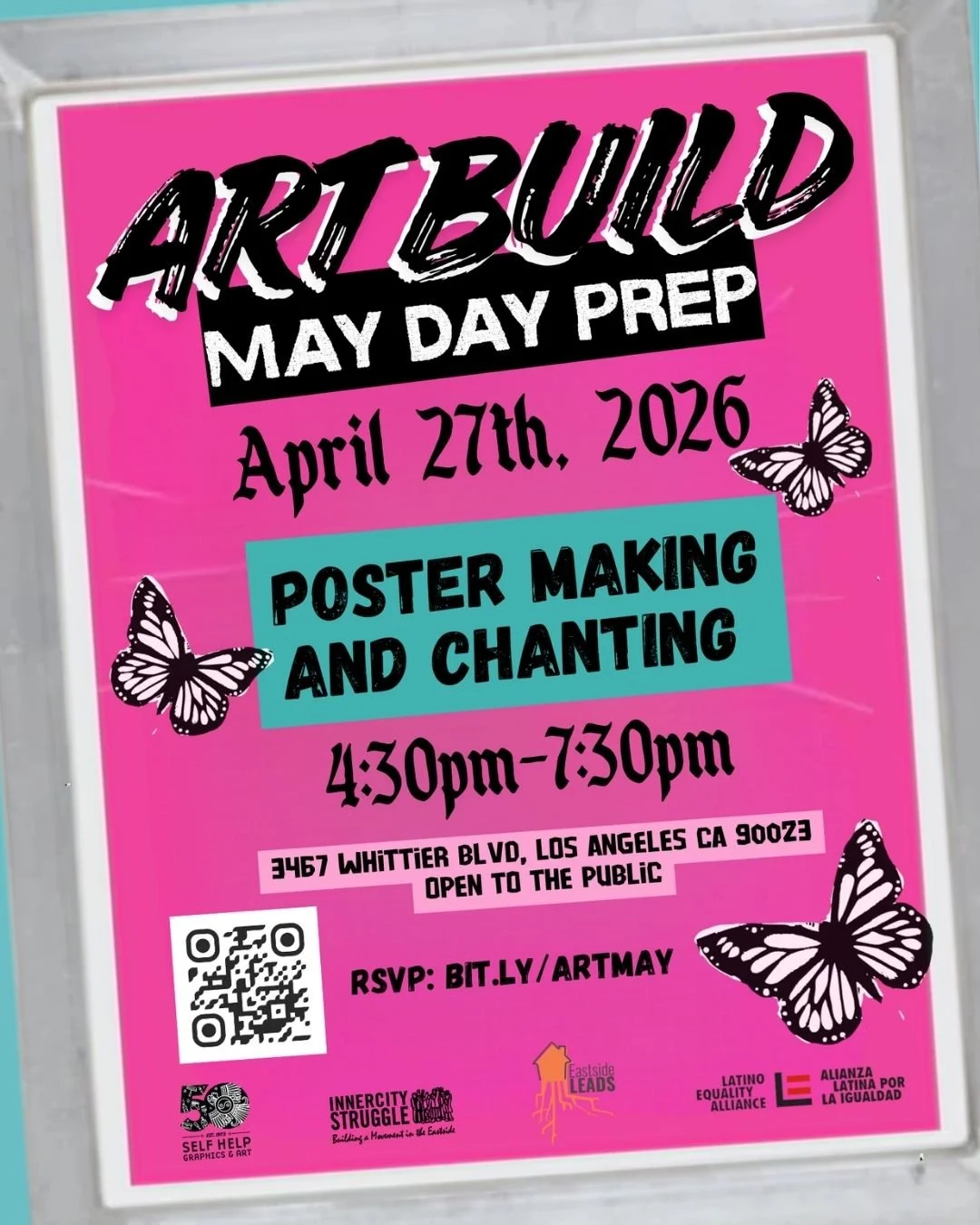
During the membership meeting, we were also able to invite our coalition membership to our May Day art build, the first project our artivists took on. In collaboration with InnerCity Struggle (ICS) and Latino Equality Alliance (LEA), our artivists led the creation of protest posters for a May Day Artbuild on April 27th.
In preparation for this artbuild, our youth worked with artist Joe Galarza to prepare paper stencils that would be screenprinted and spraypainted to make protest posters. In this workshop, Galarza taught stencilmaking techniques and grounded our youth in the Zapatista values that inform his work as an artist, educator, and activist. Learning about Galarza’s past experiences, from Aztlan Underground to working with the incarcerated as an art educator, was compelling. Tony Valentino states, “The work he [did] at correctional facilities [was] really inspiring. It actually led me to inquire with Homeboy Industries about being a teaching artist. He's definitely the reason why I decided to try to step into that realm.”
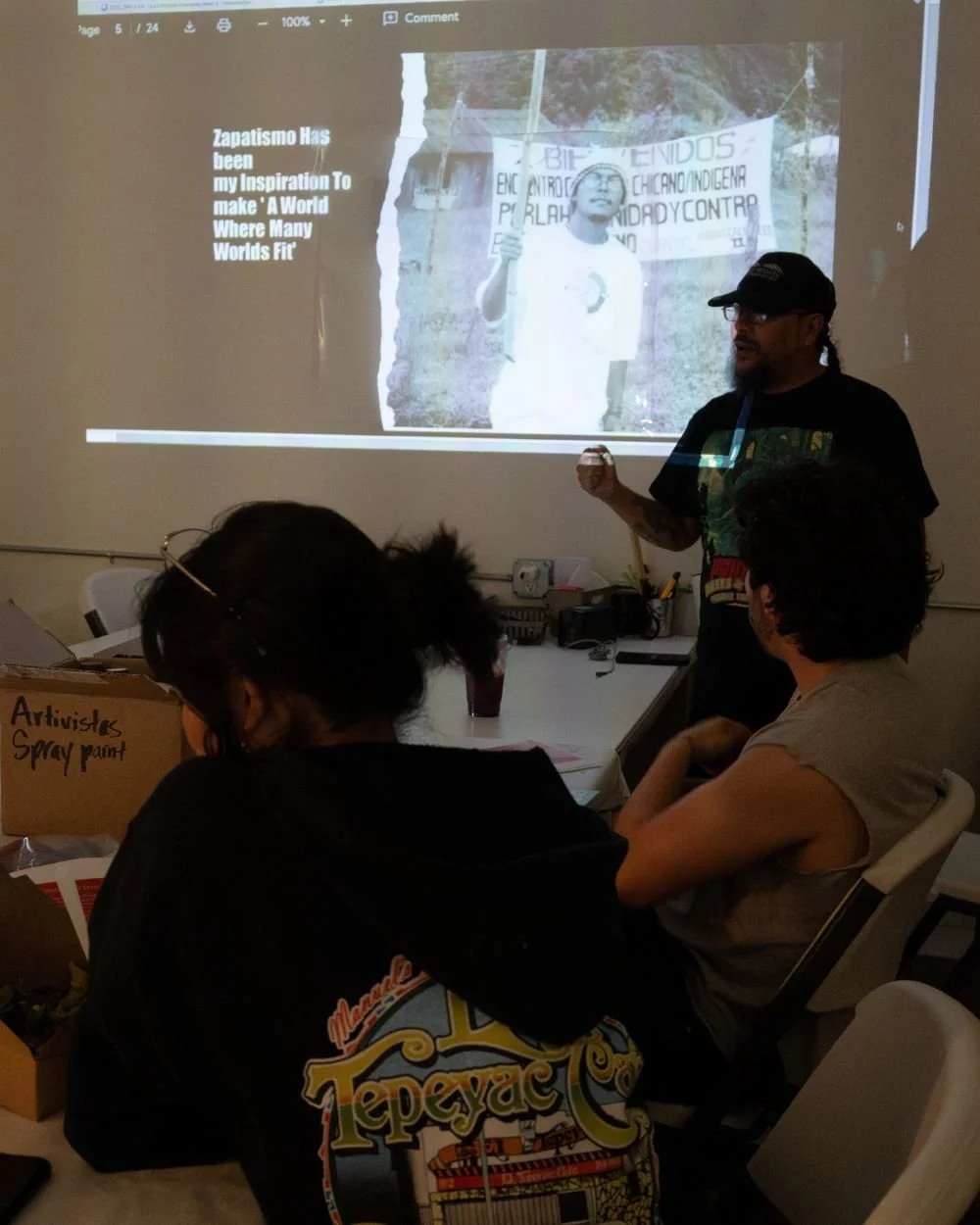
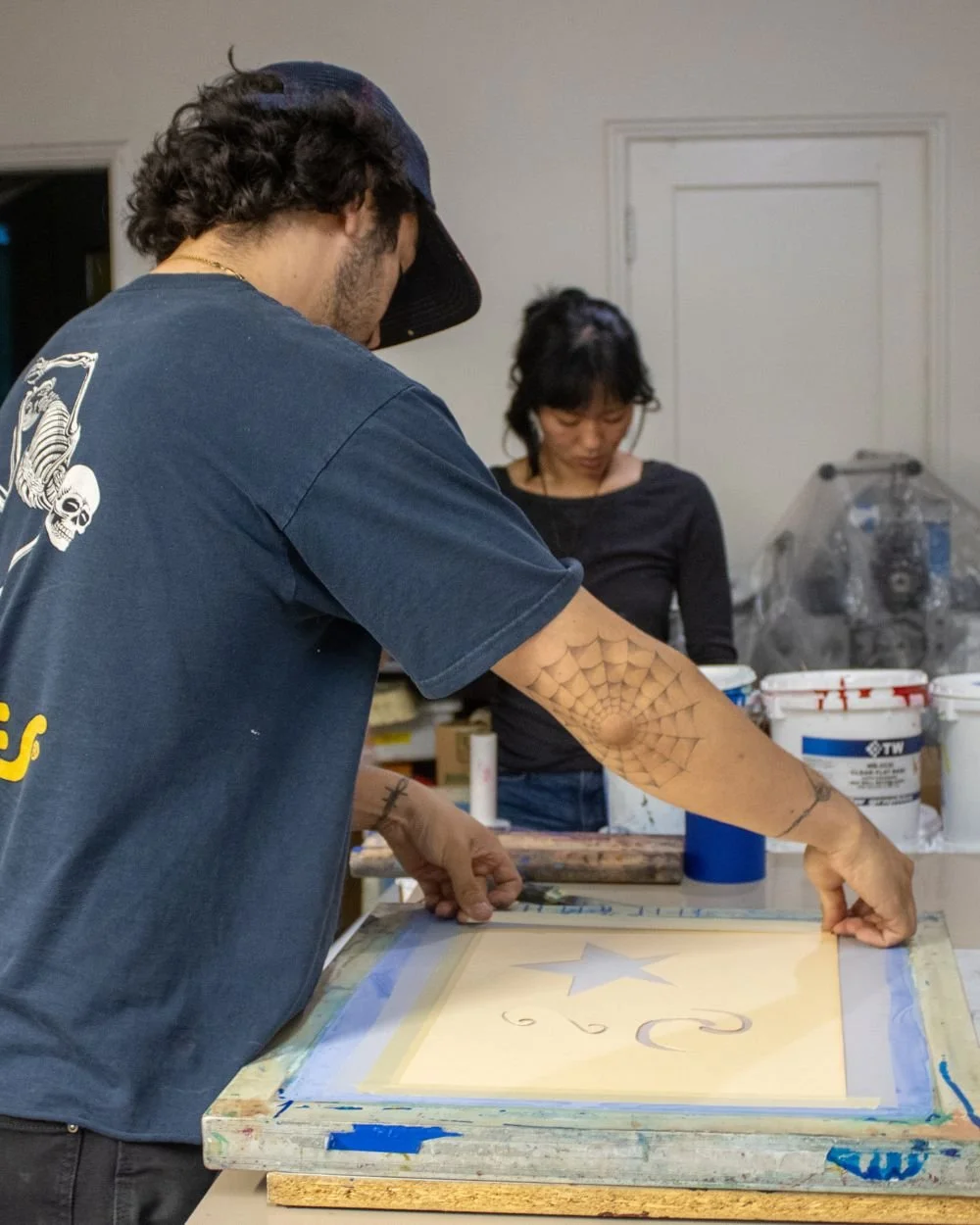
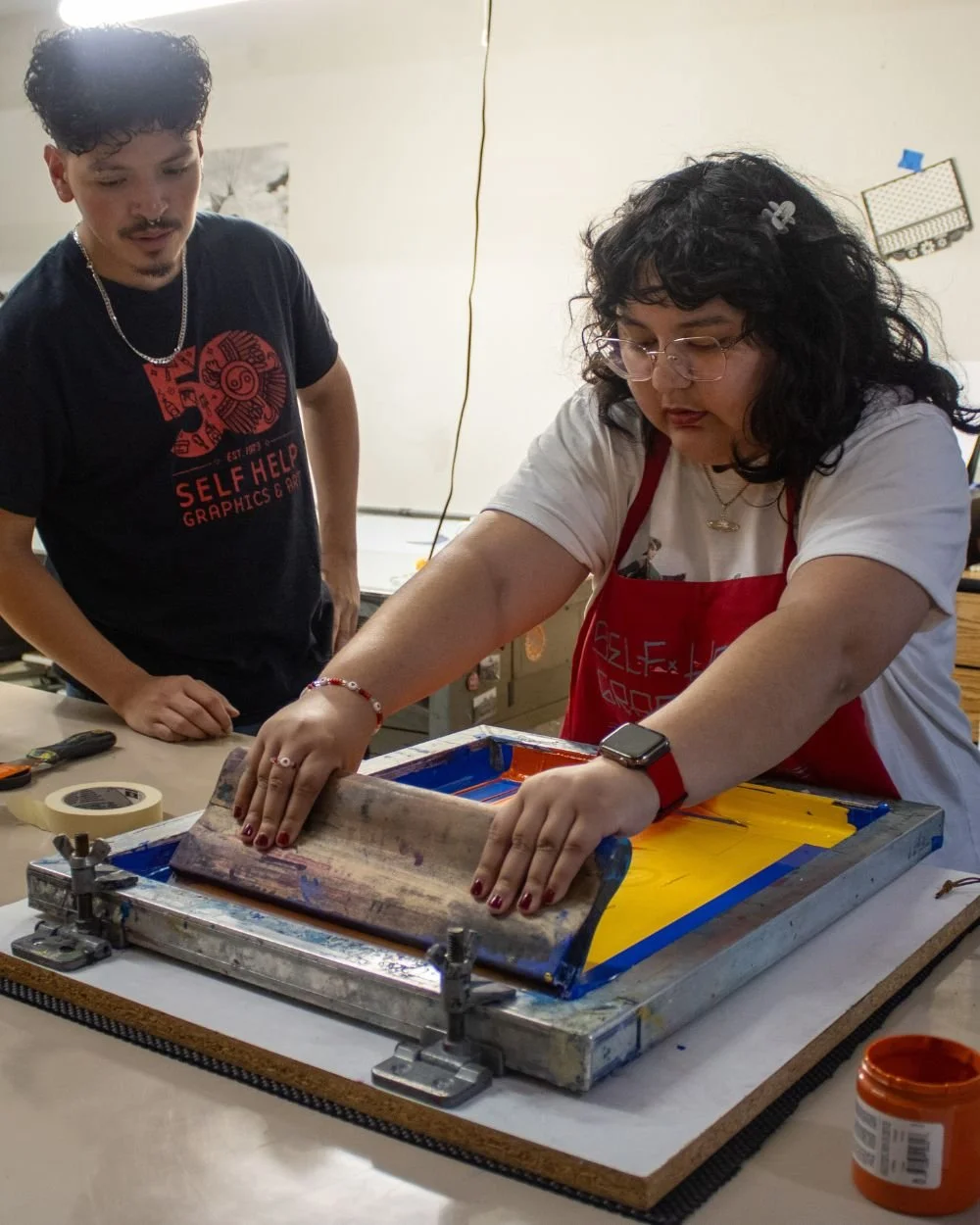
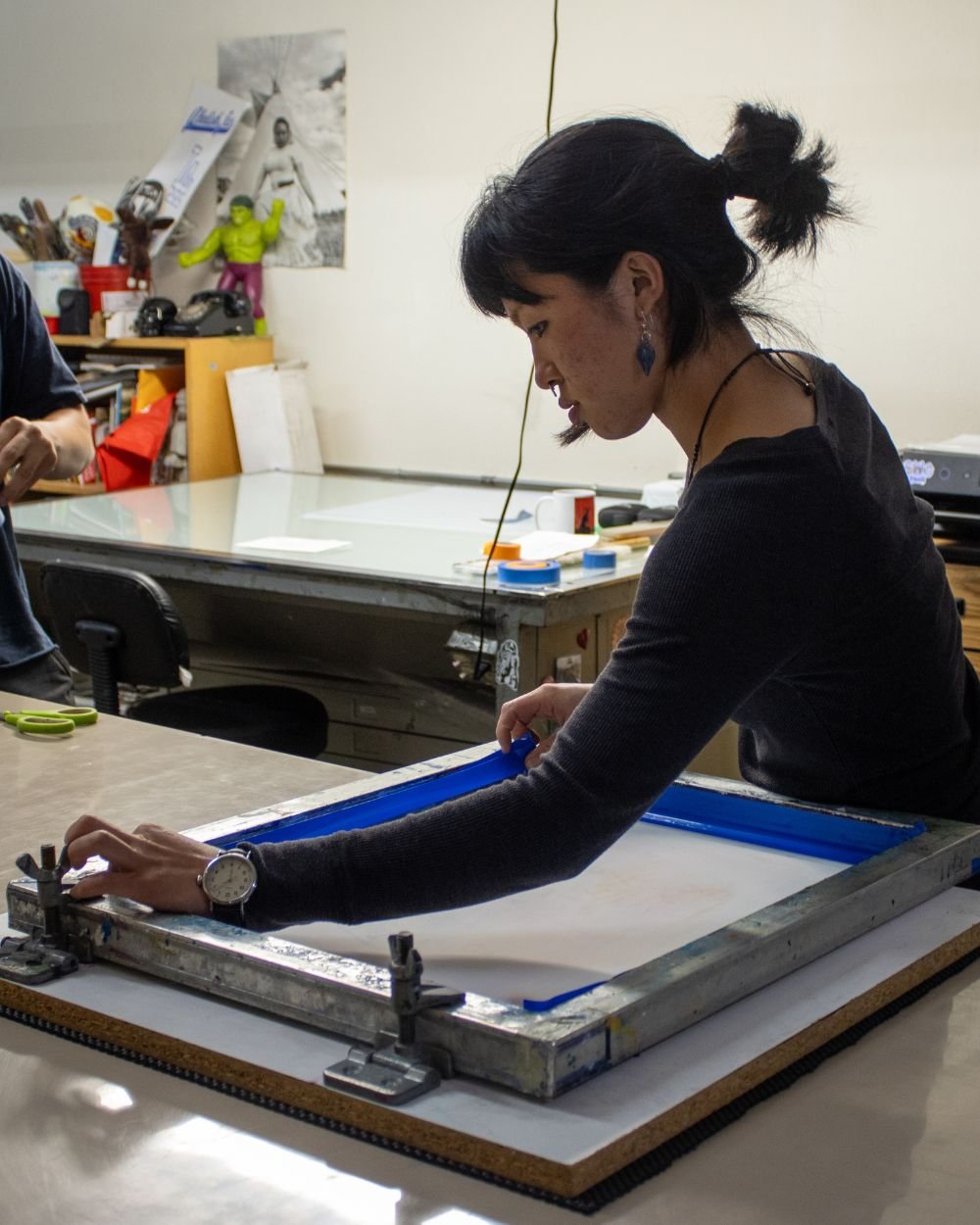
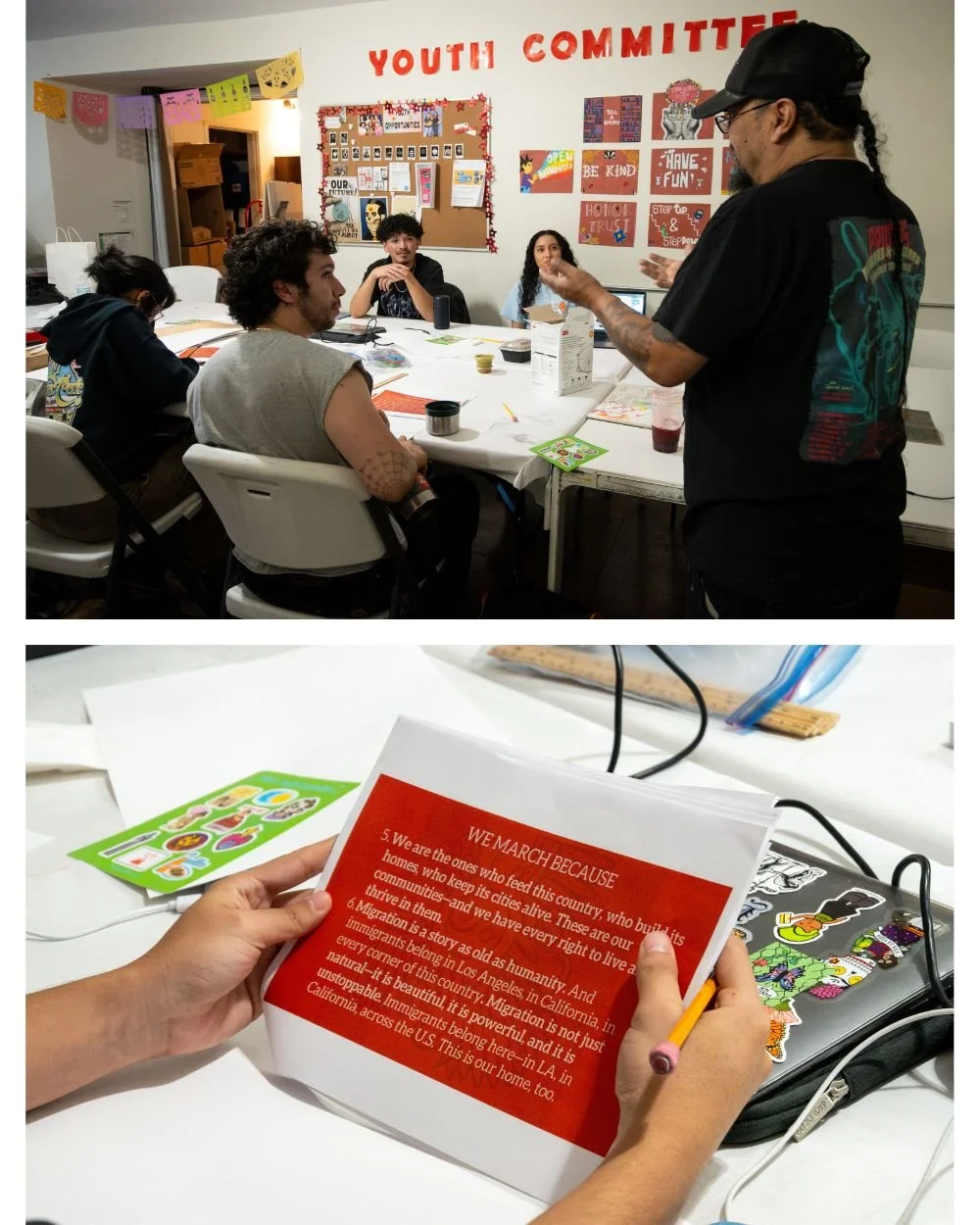
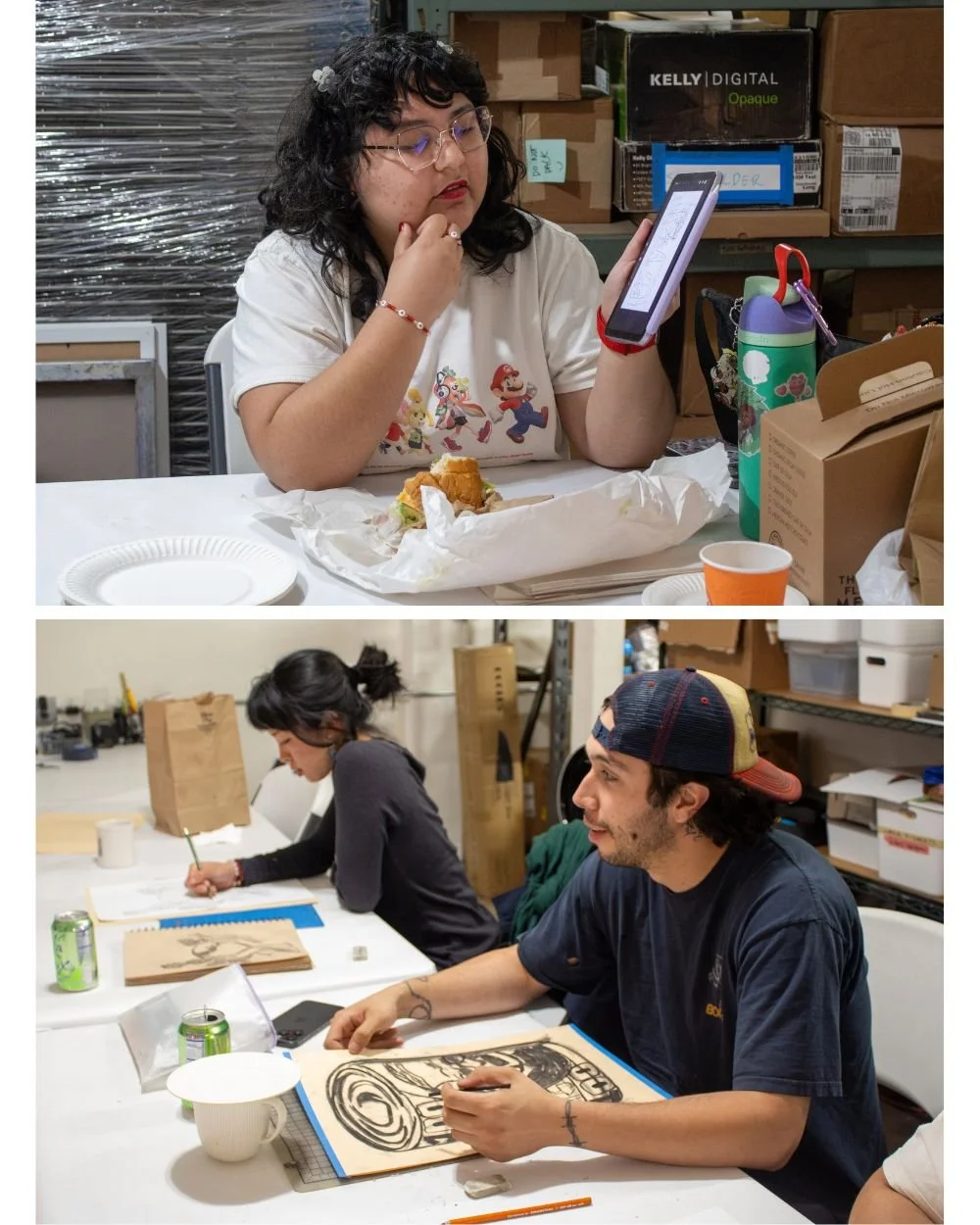
Artist Joe Galarza engaging 2026 Youth Artivists with background information on his artistic practice and a stencilmaking workshop.
The day of our art build, our youth artivists live printed their stencil designs while community members created their own messages on the backside of their posters. Other participants practiced writing and singing chants for our march. Our youth then transitioned to spraypainting their stencil designs, guiding community members to participate. “I loved that it was very intergenerational. There were a lot of youth there and there were a lot of señoras there,” Keiko Utsumi reflects. “I enjoyed the spray painting part because we were able to invite everyone to [participate]. And I was looking at everyone's posters and seeing all of the art flowing out of everyone…It just felt like a real sense of collective demands and collective participation.”
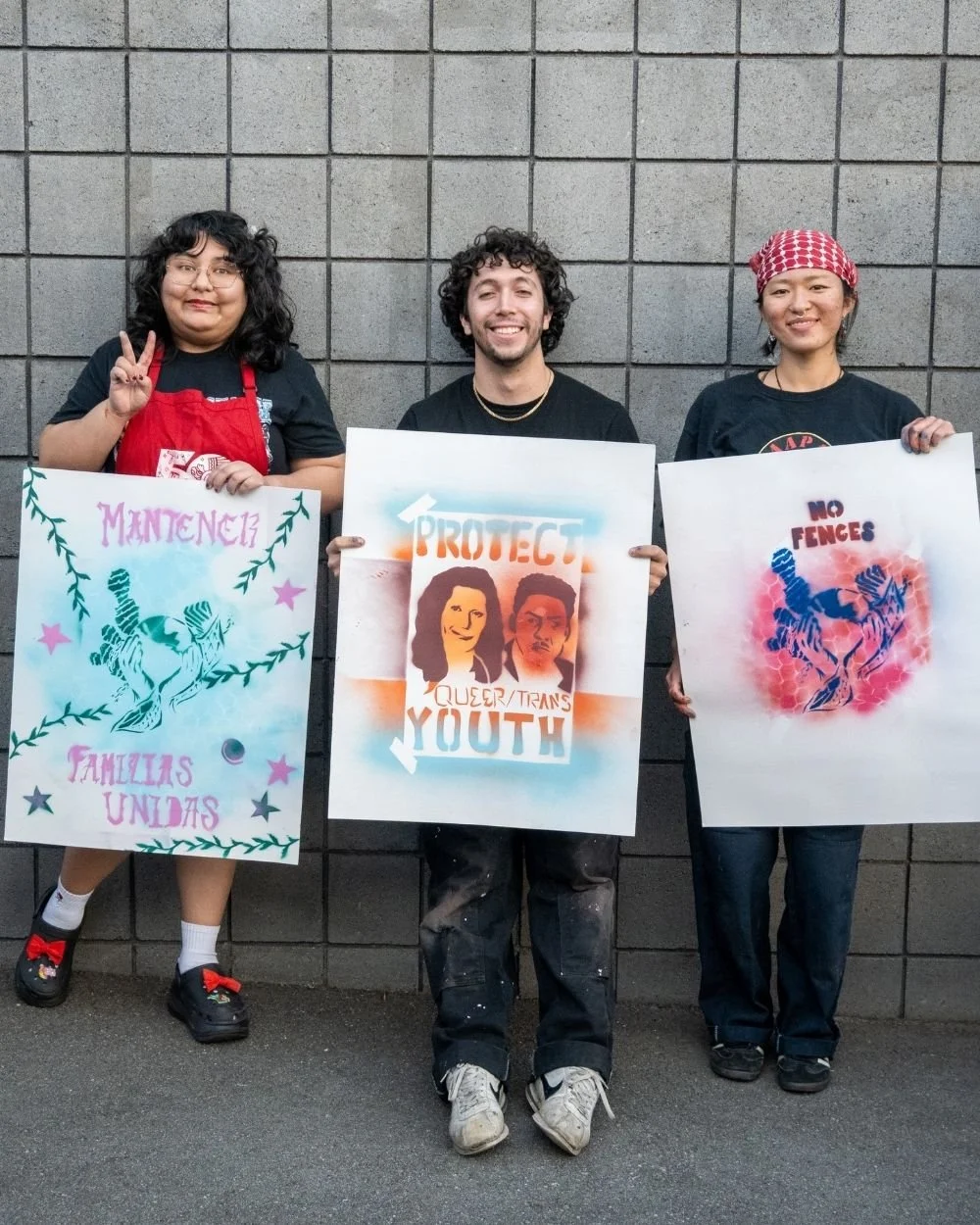
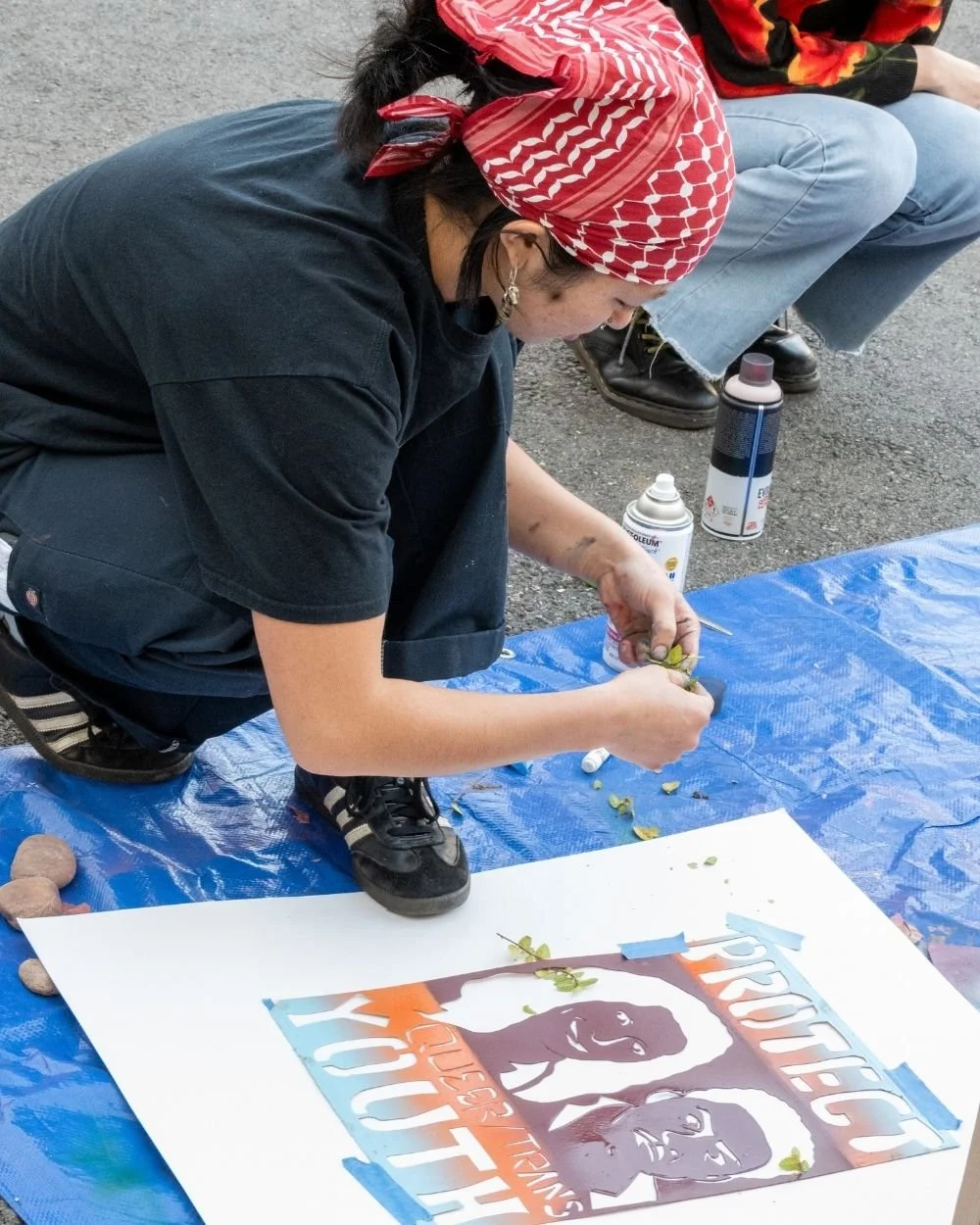
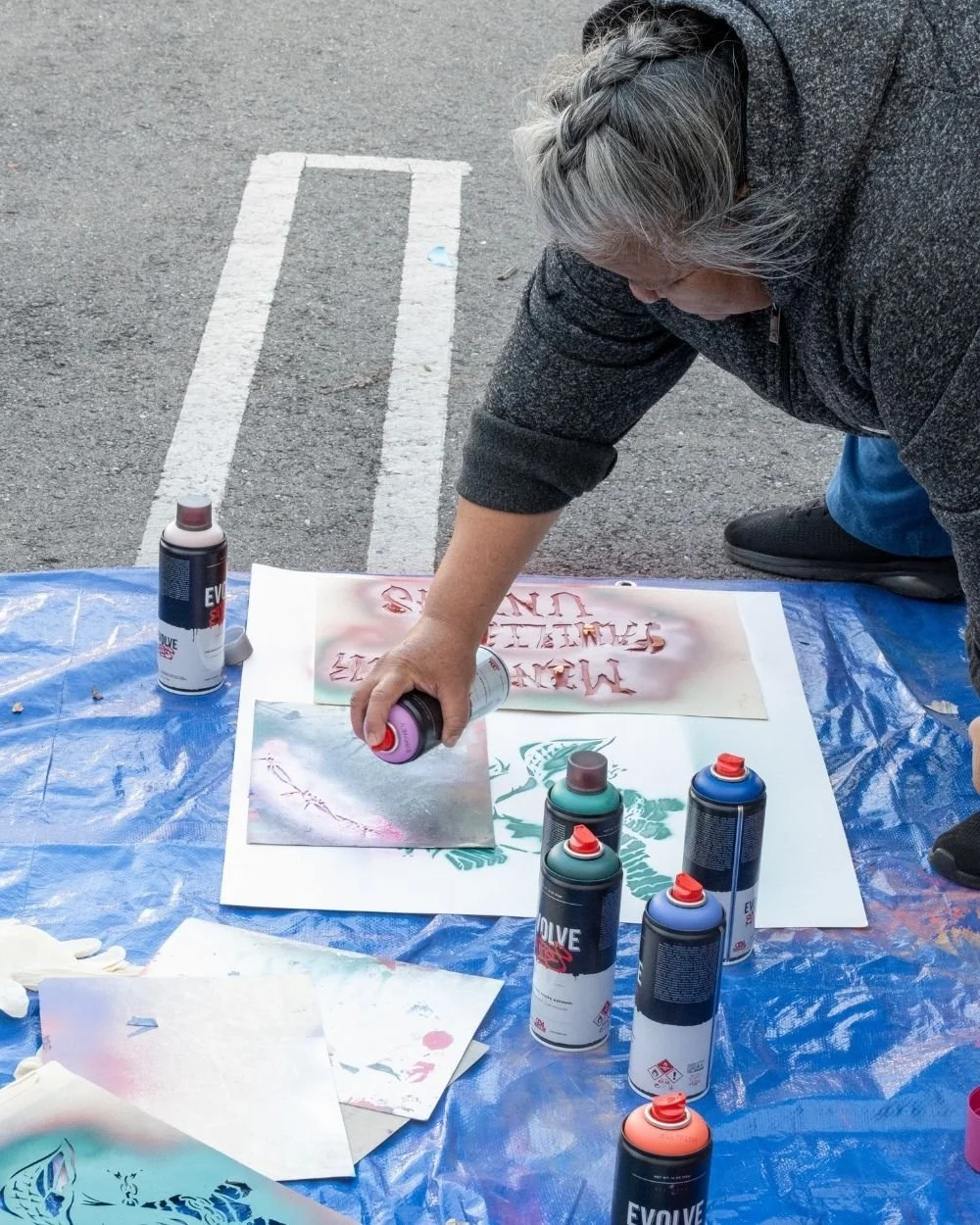
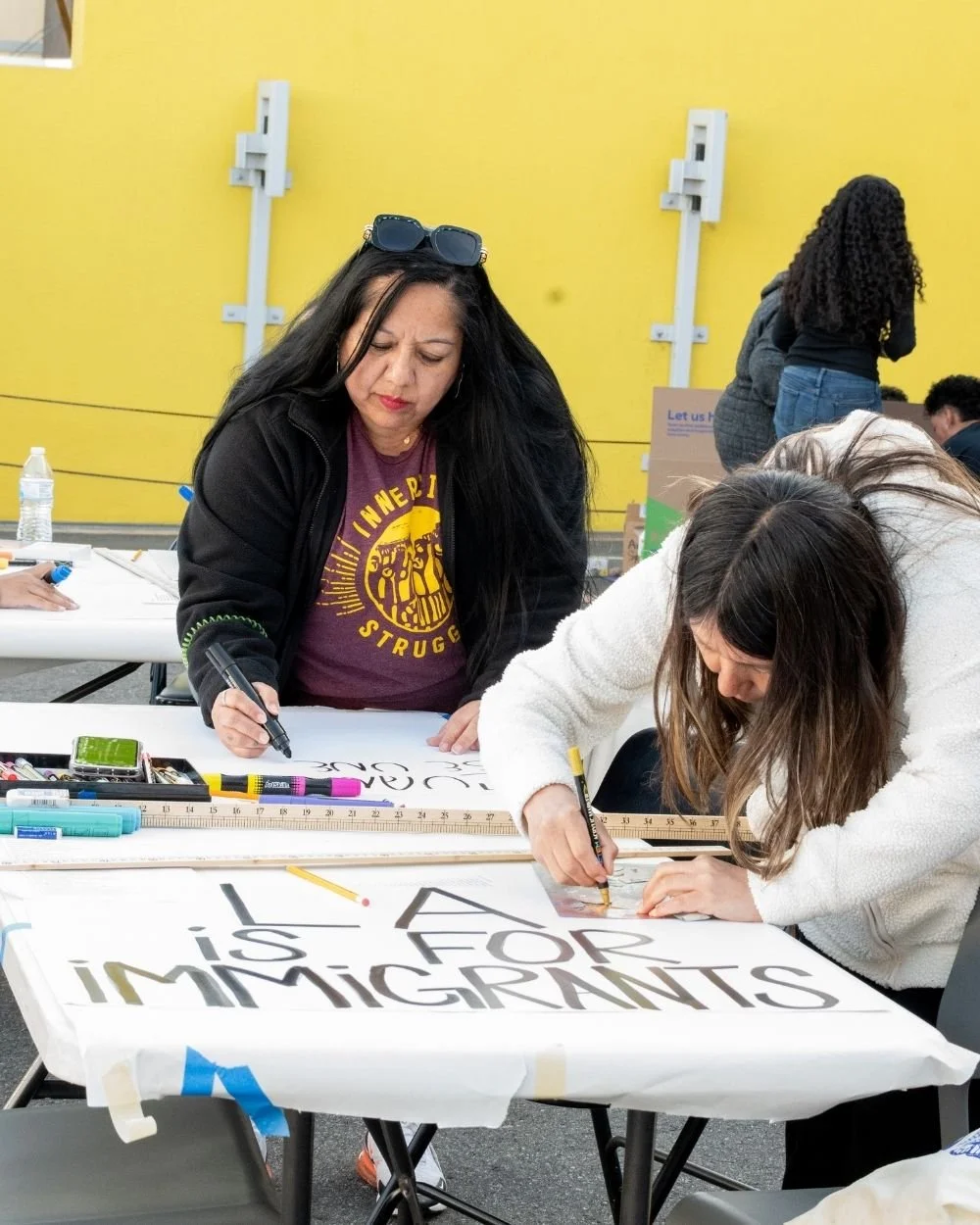
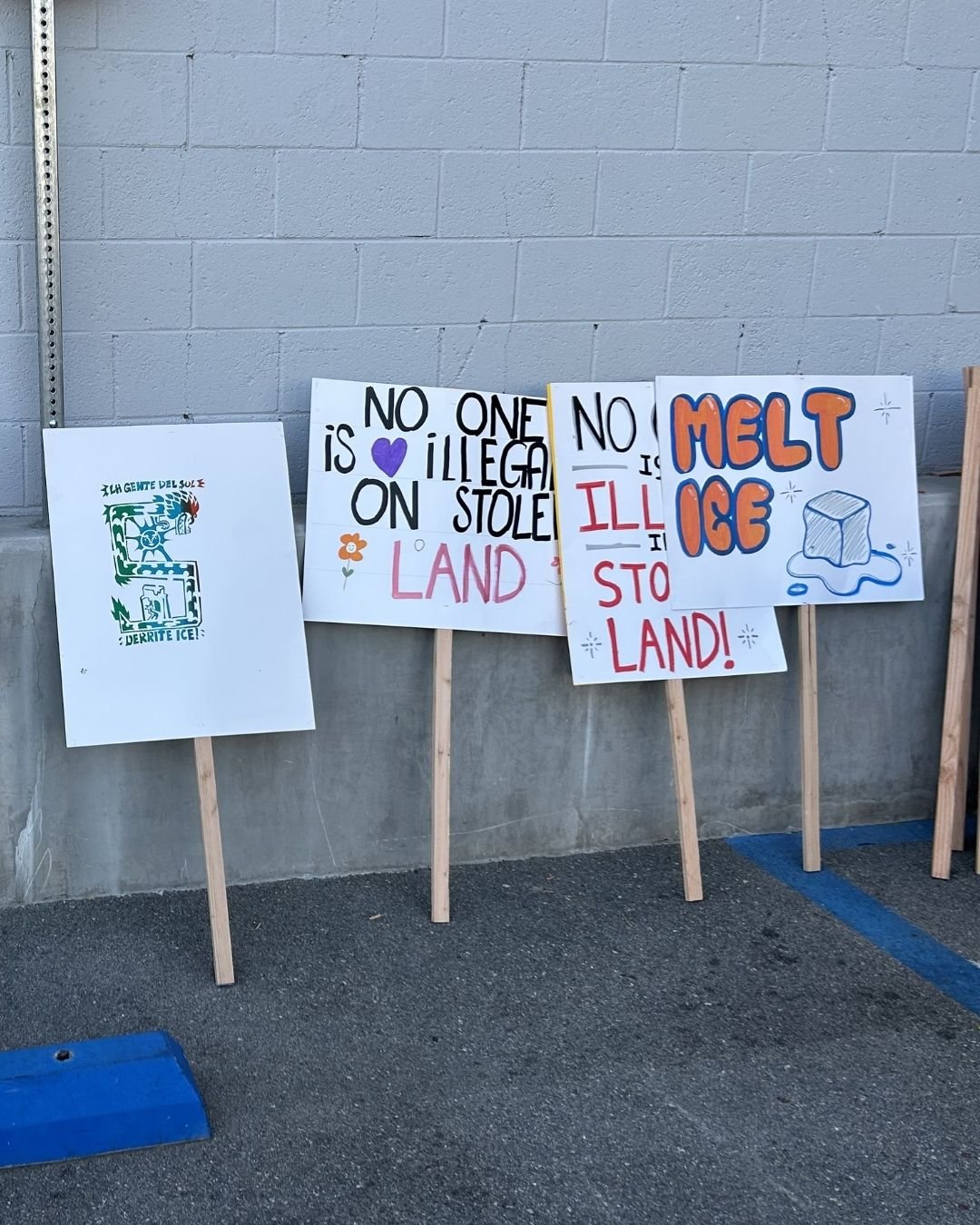
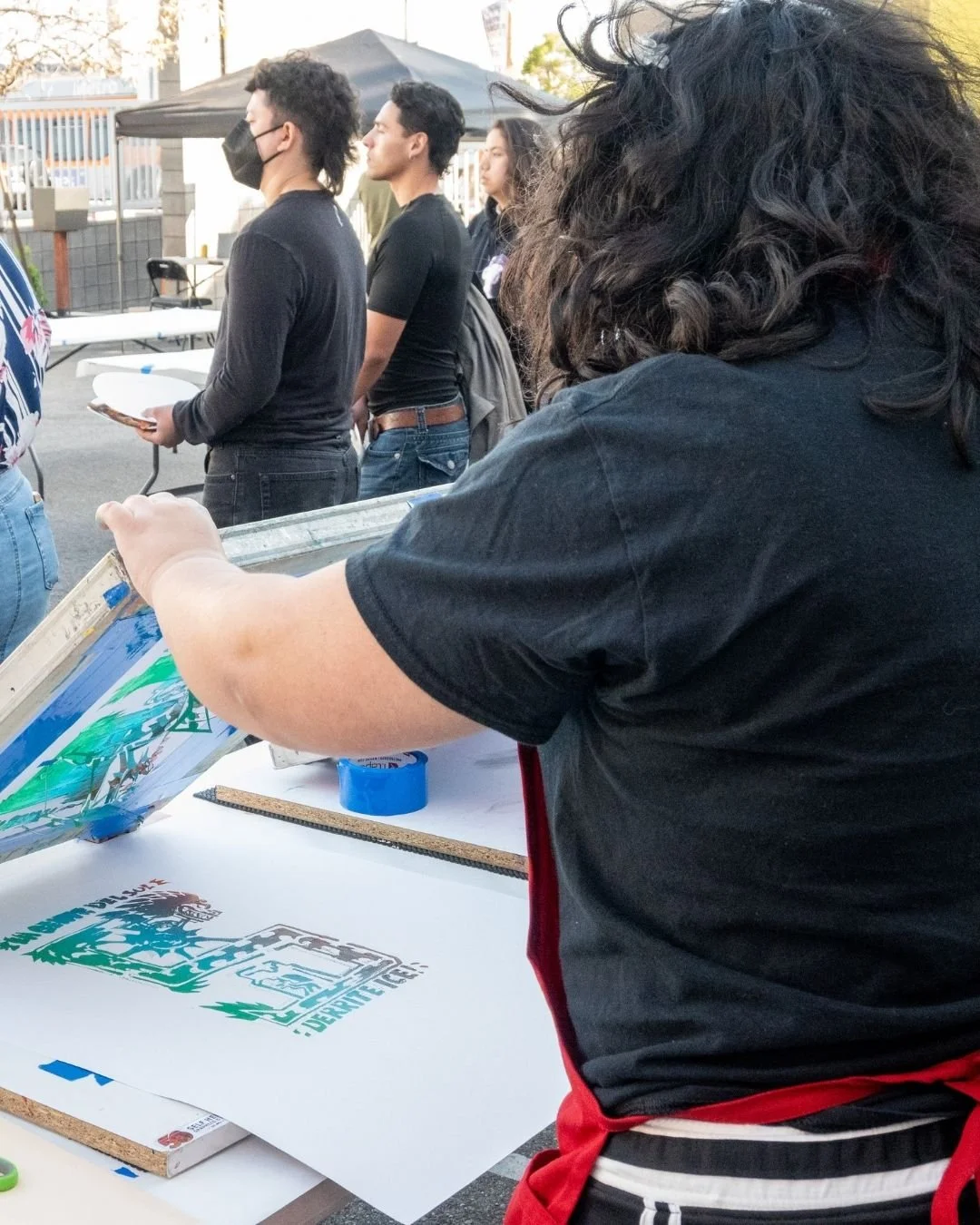
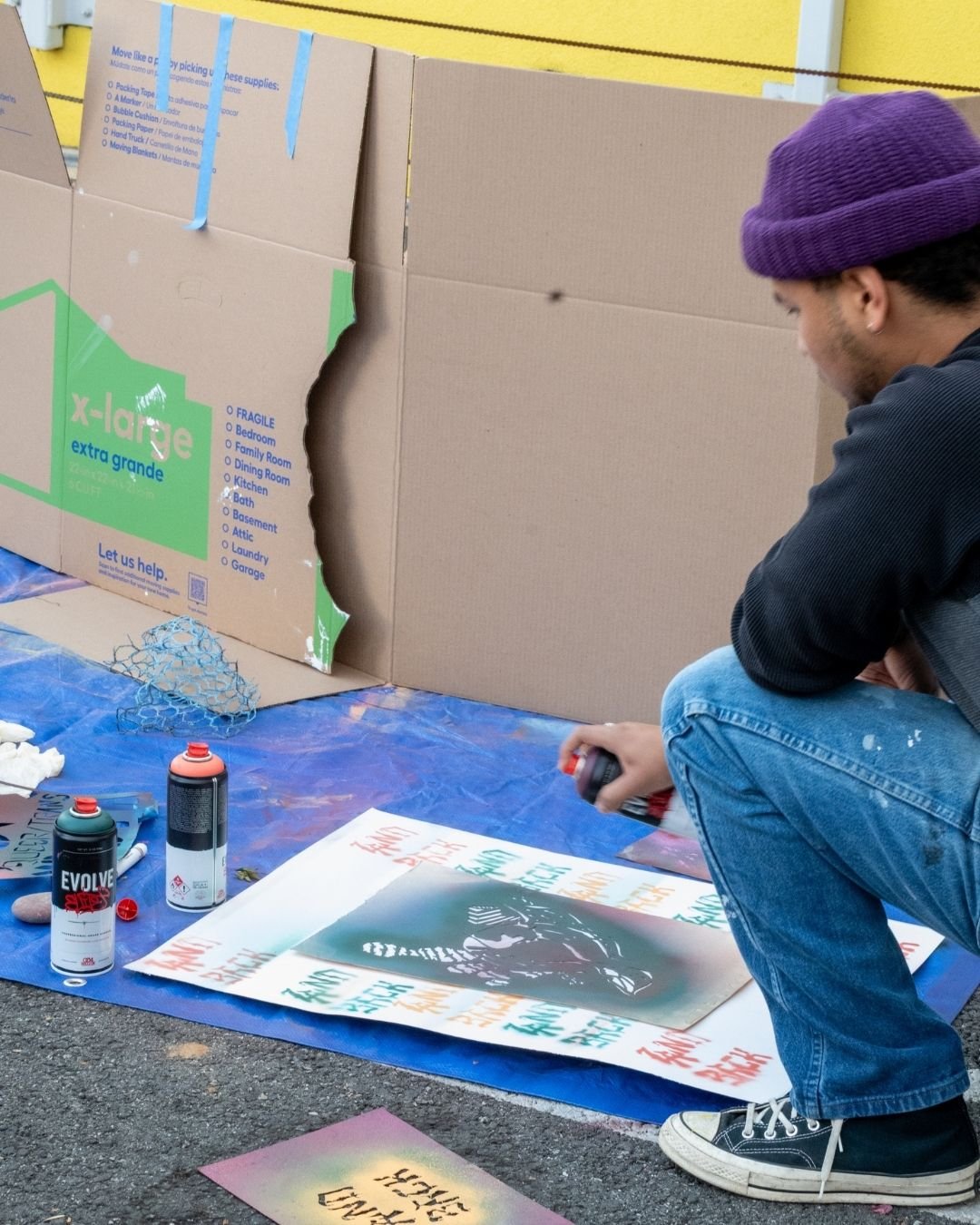
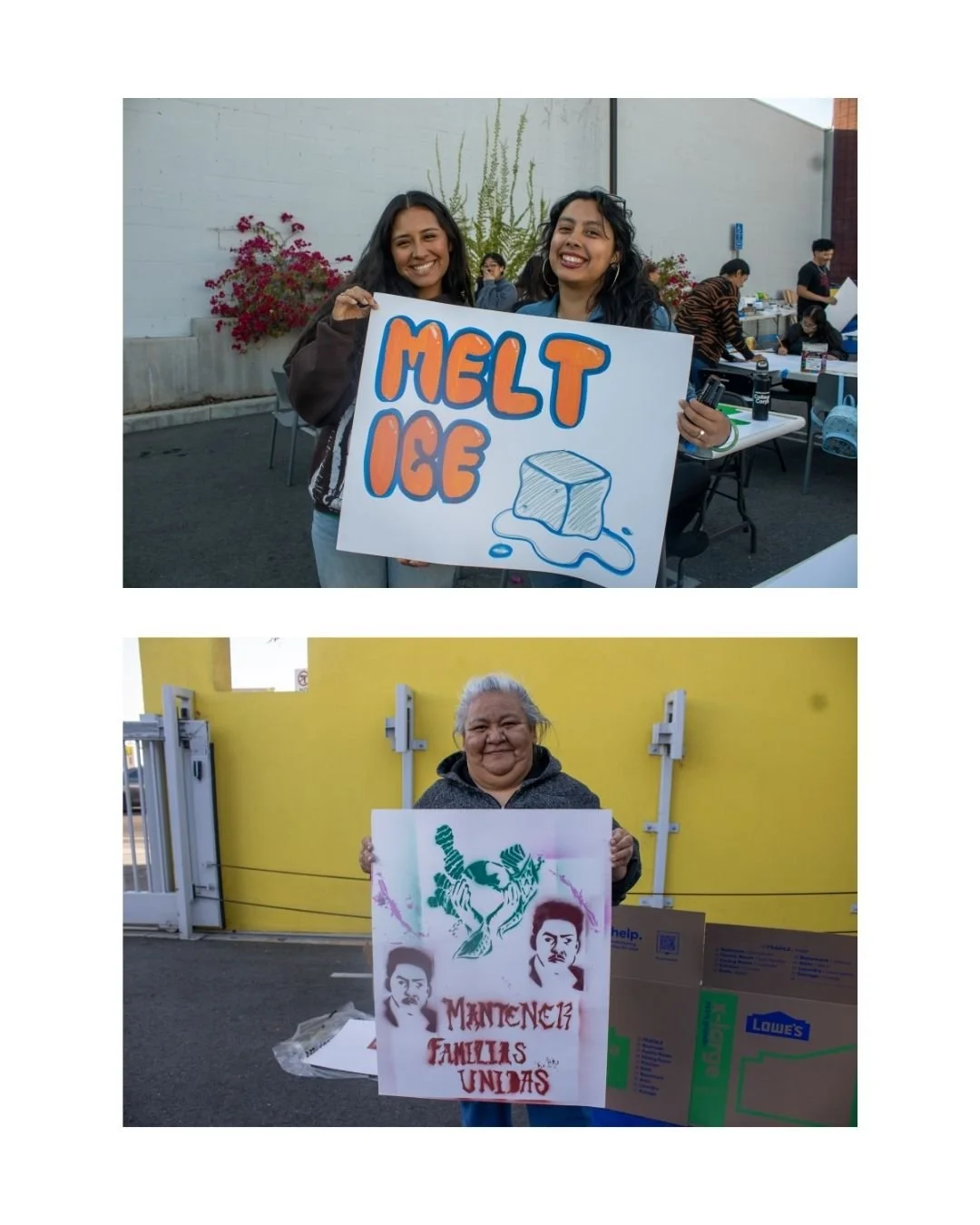
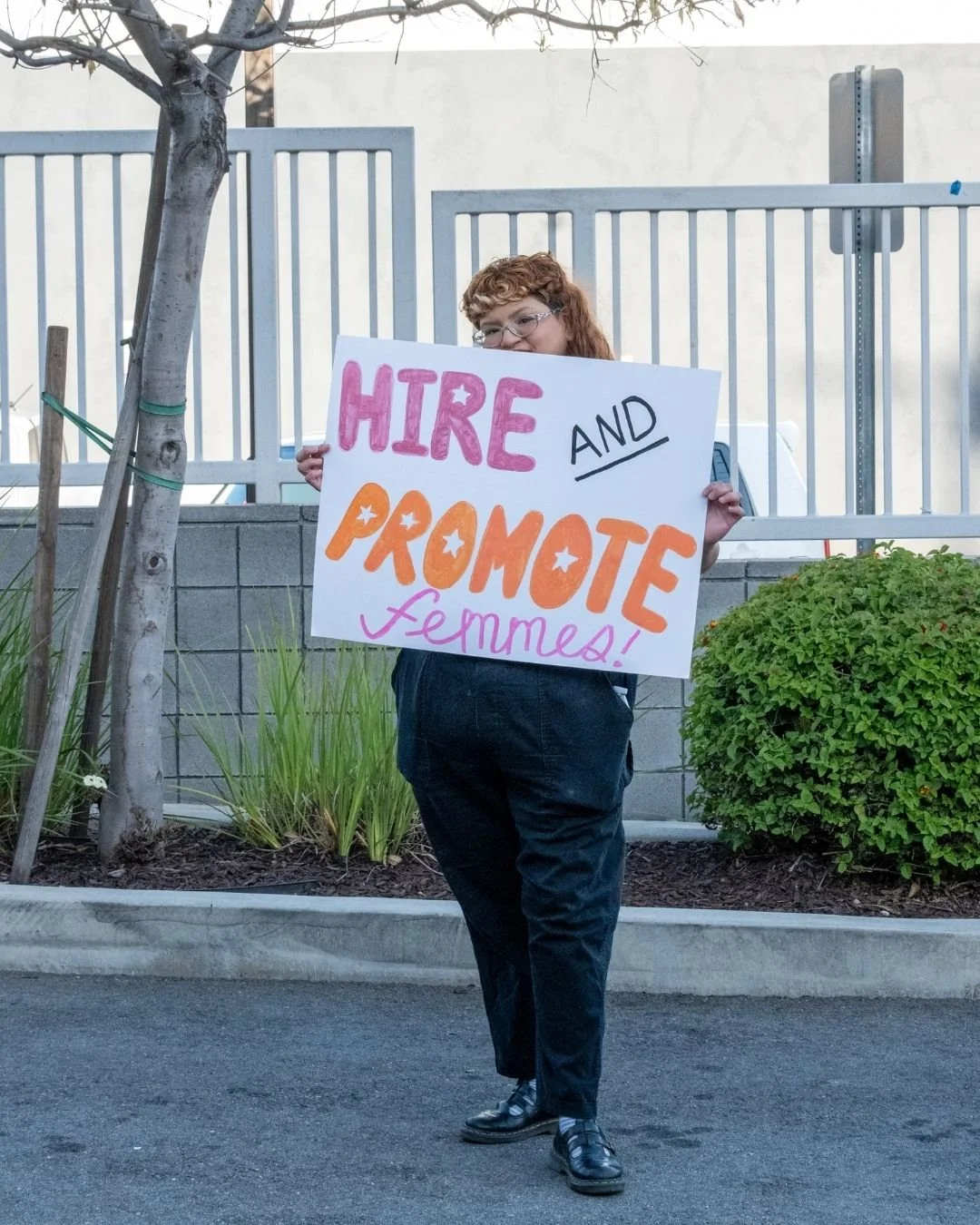
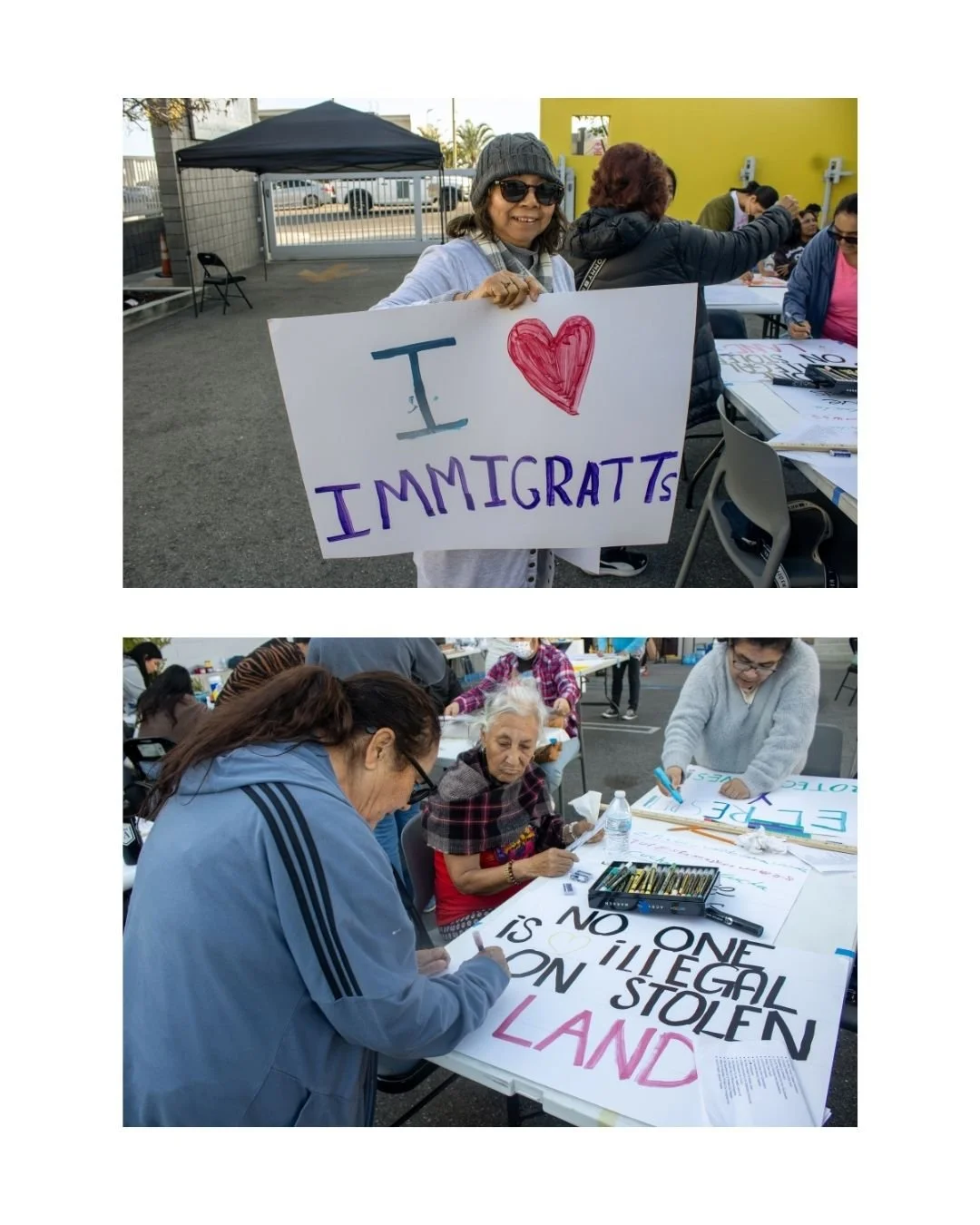
2026 Youth Artivists leading poster making activities at Inner City Struggle’s Art Build on April 27, 2026 in preparation for the Los Angeles May Day March on May 1, 2026.
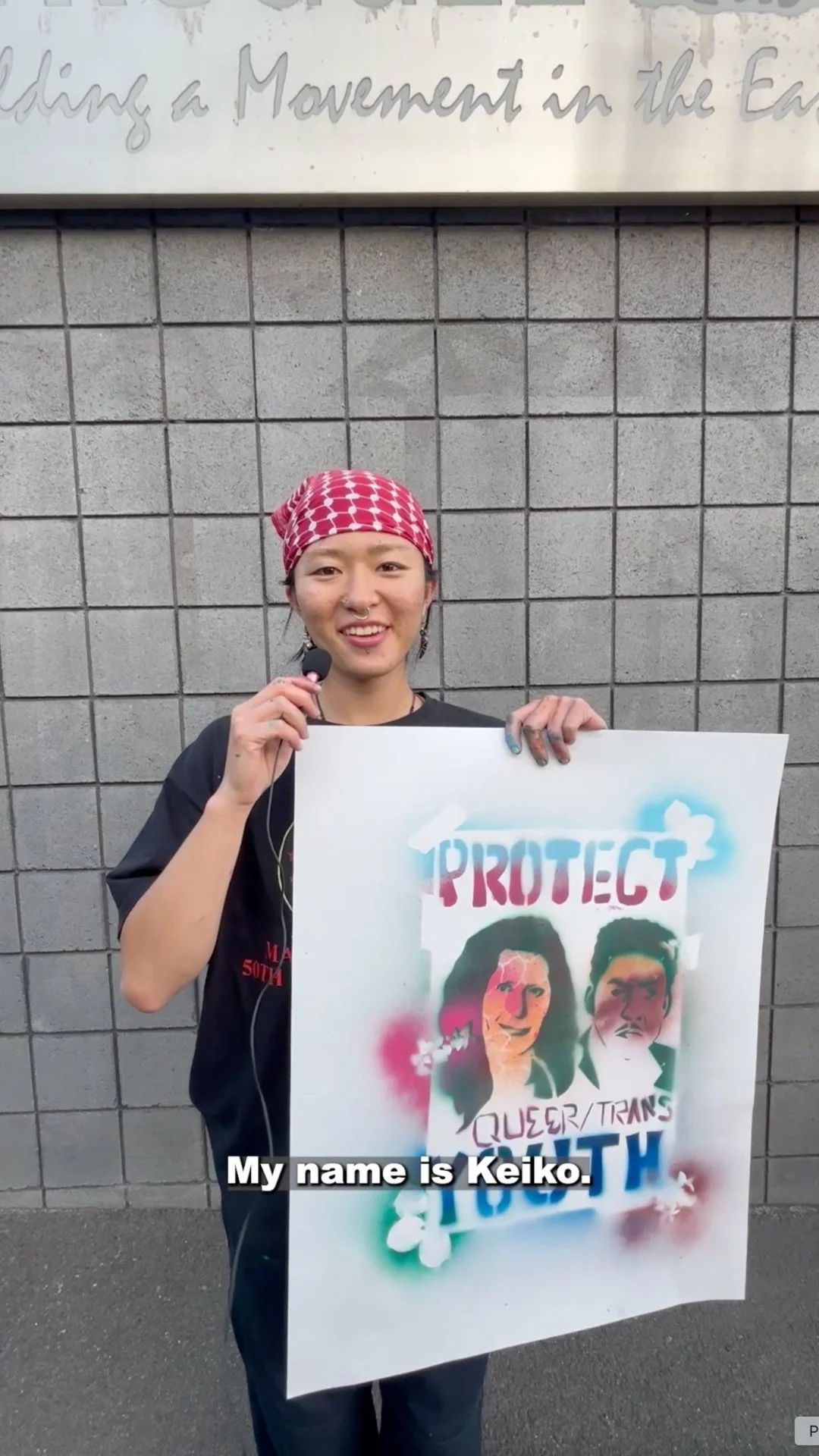
WATCH VIDEO OF “ART BUILD” IN ACTION HERE! ▶️
The artivists describe the day of the May Day march as “safe, organized, informative, on top of that, everybody was just taking care of one another.” It was exciting to see the protest imagery our youth designed and the messages written by our intercultural community being carried through the Los Angeles streets between MacArthur Park and Grand Park. Maya Garcia-Luis shares, “It was such an honor and privilege to walk with everyone. As an artist that works in the community, what good is my art if it doesn’t connect to anyone in the community? When I marched, it felt like I was looking at my grandmother, my great aunt and uncles that fought to be here.”
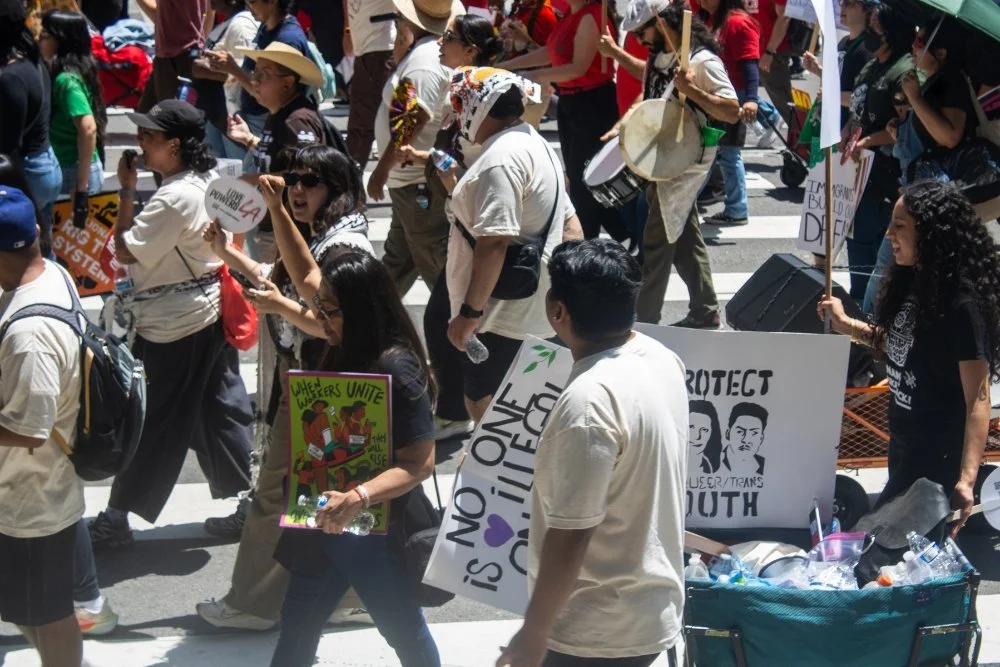
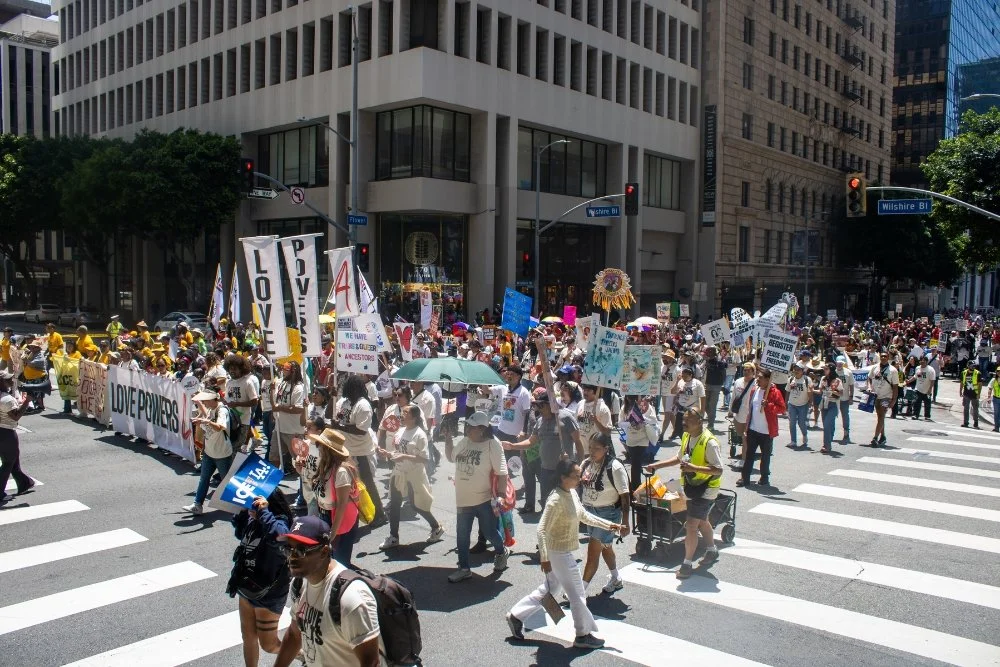
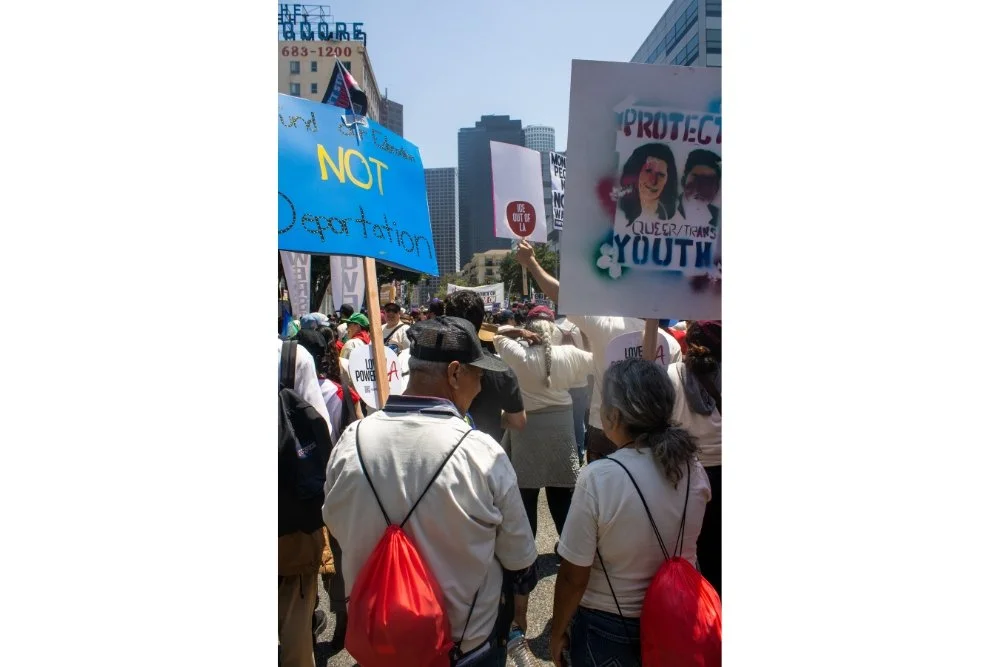
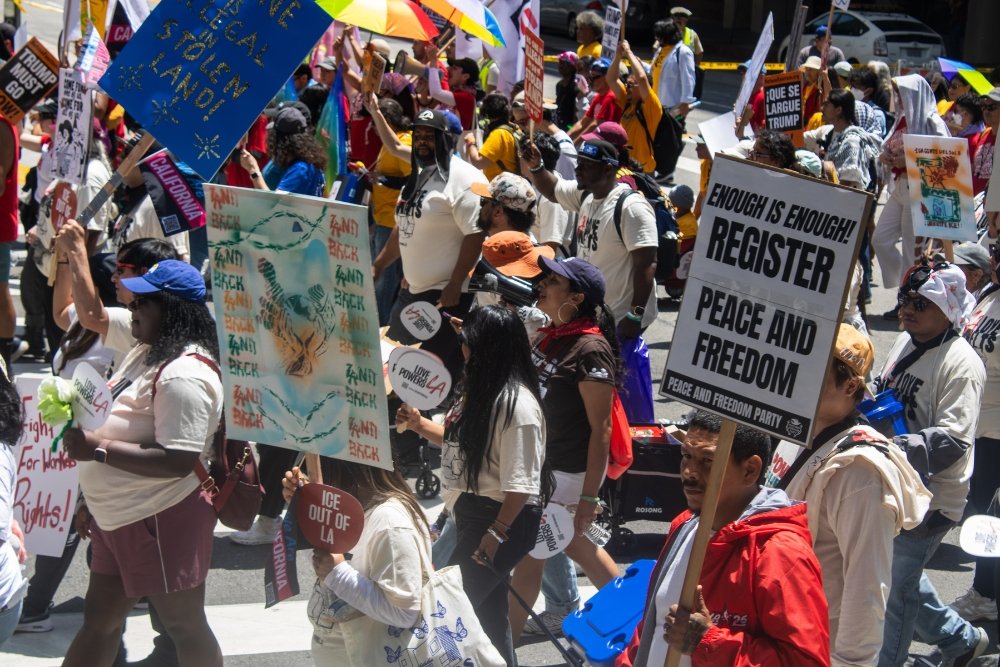
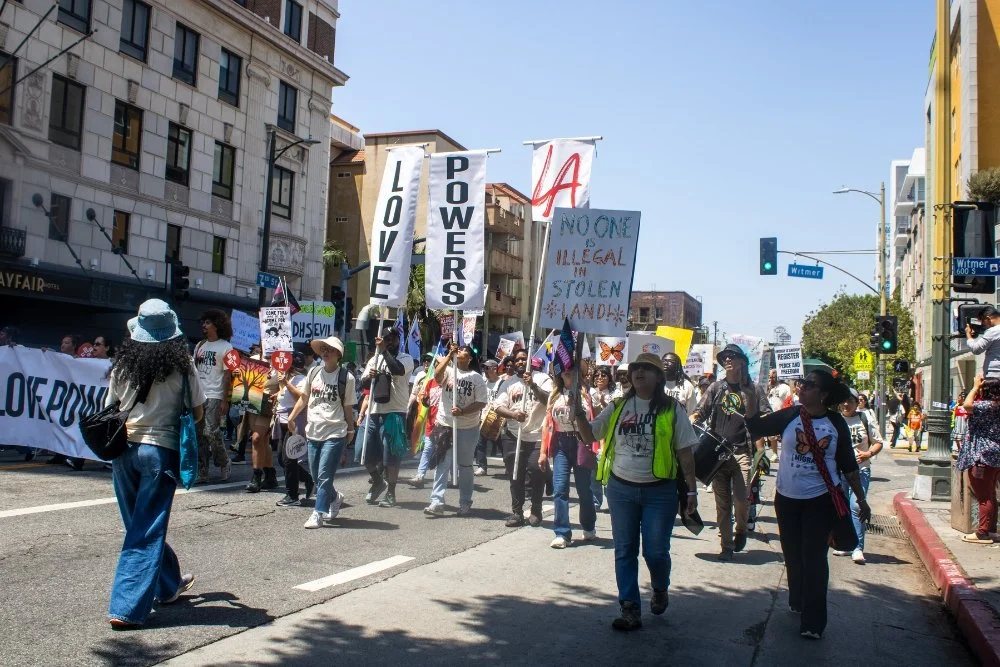
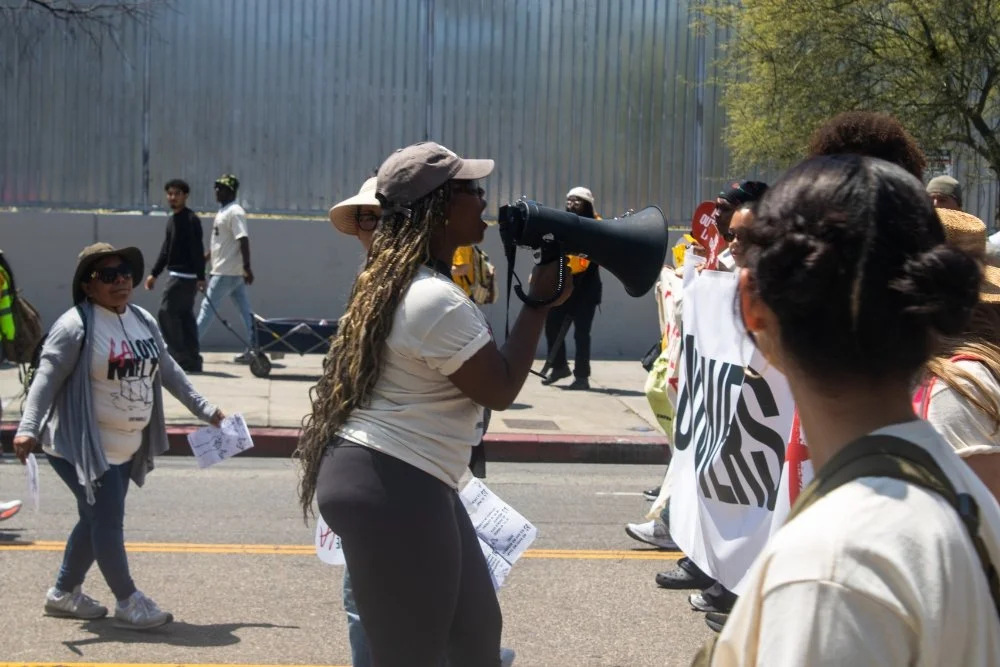
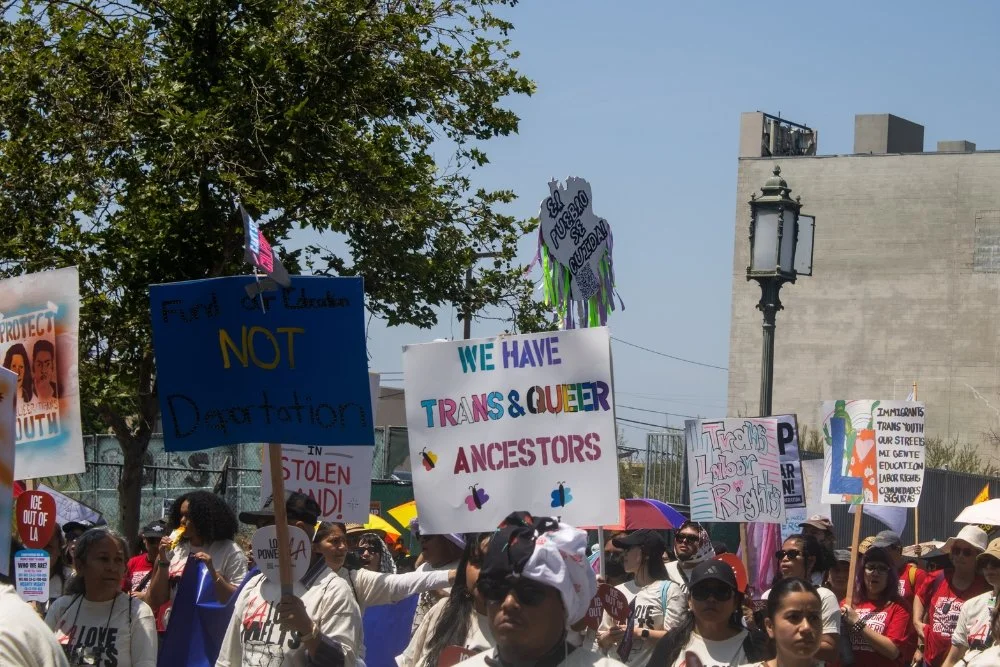
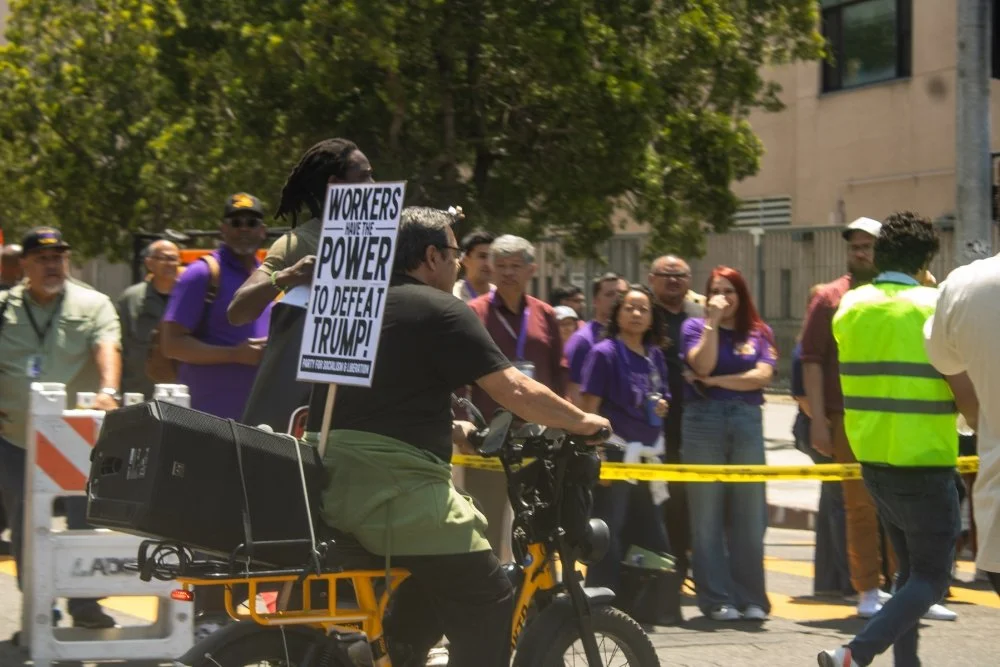
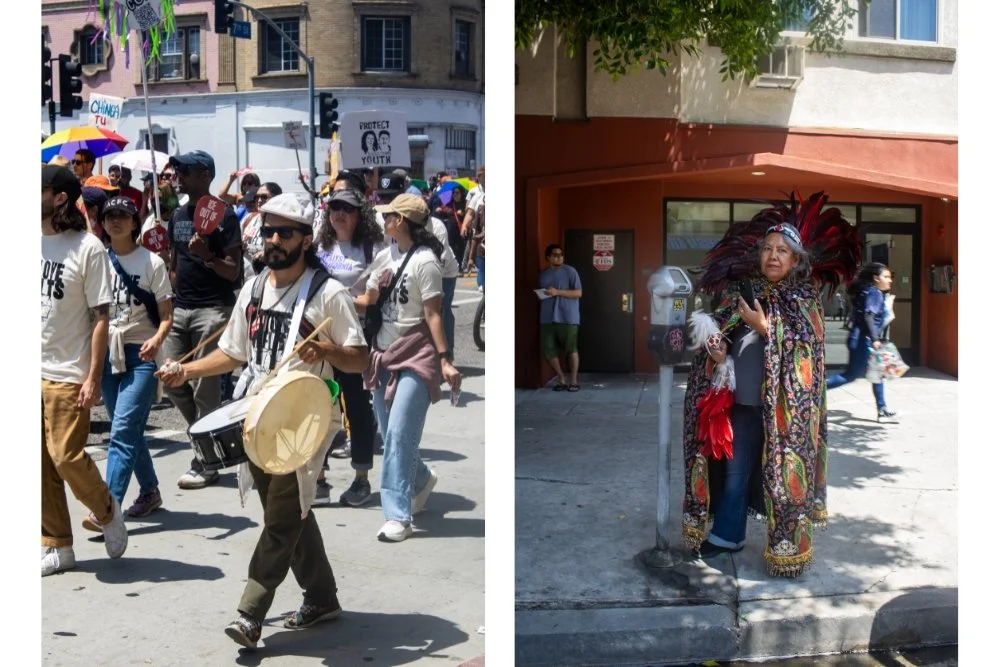
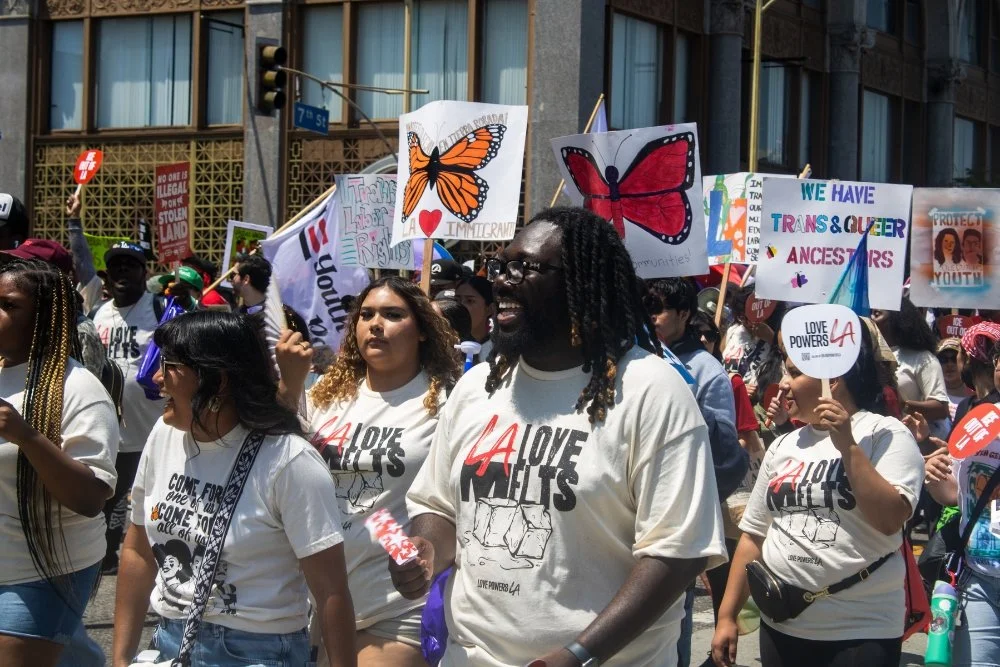
May Day march between MacArthur Park and Grand Park on May 1, 2026.
Photos by Tony Valentino.
Learn more about our artivists’ poster designs below.
MAY DAY POSTER DESIGNS
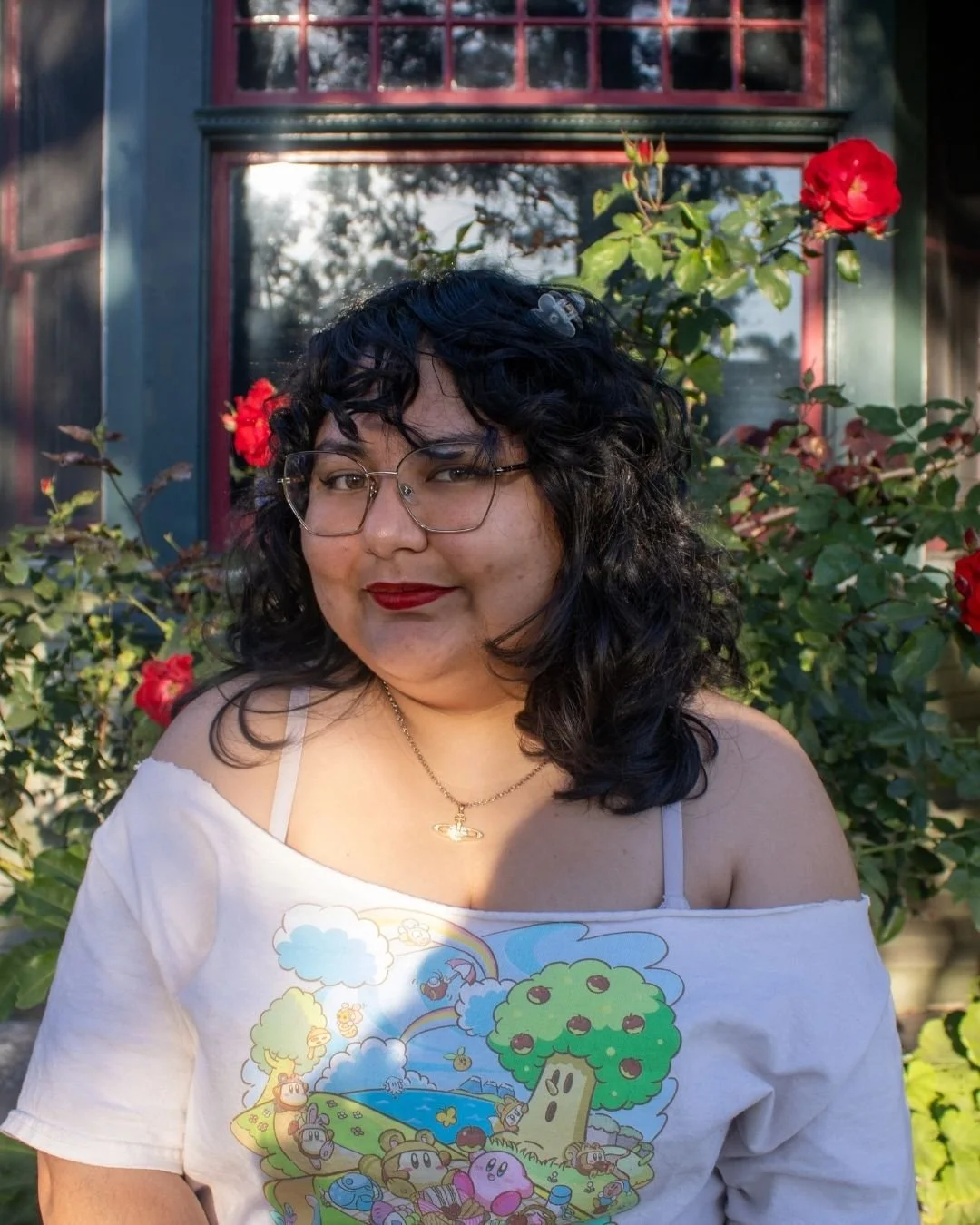
Maya Garcia-Luis
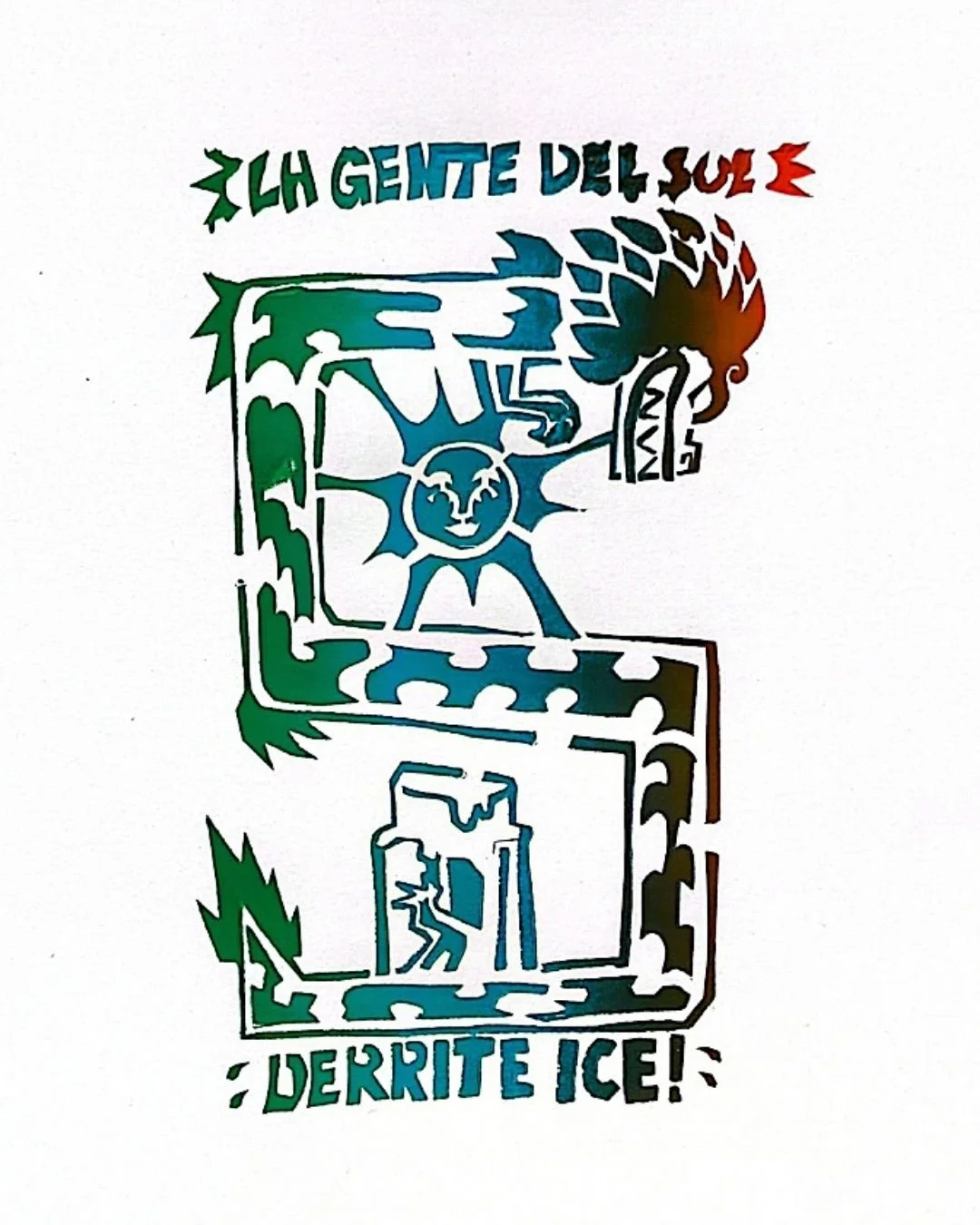
Maya Garcia-Luis’s anti-ICE poster design was inspired by the deities in Mexican and Filipino folklore she grew up learning about through her family.
“I was especially fascinated by the quetzalcoatl or the idea of a feathered serpent. In particular, I really loved the idea that we, as mexicanos, and our descendants, are protected by our deities, and that we are people of the sun,” says Garcia-Luis. “When doing my research, I thought it was ironic that we are people of the sun and our enemy is ICE. I’m like oh–what does a sun do to ICE? Melt it!”
Garcia-Luis shares that due to colonization, there is less surviving pre-colonial art, especially in the Philippines. Due to this, Garcia-Luis actively tries to incorporate pre-colonial art references into her artworks, imbuing them with contemporary influences like cartoons, anime, and manga. She cites her family and Persepolis (2000–2003) as a huge inspiration, created by Iranian-French artist Marjane Satrapi, who passed away on June 4, 2026.
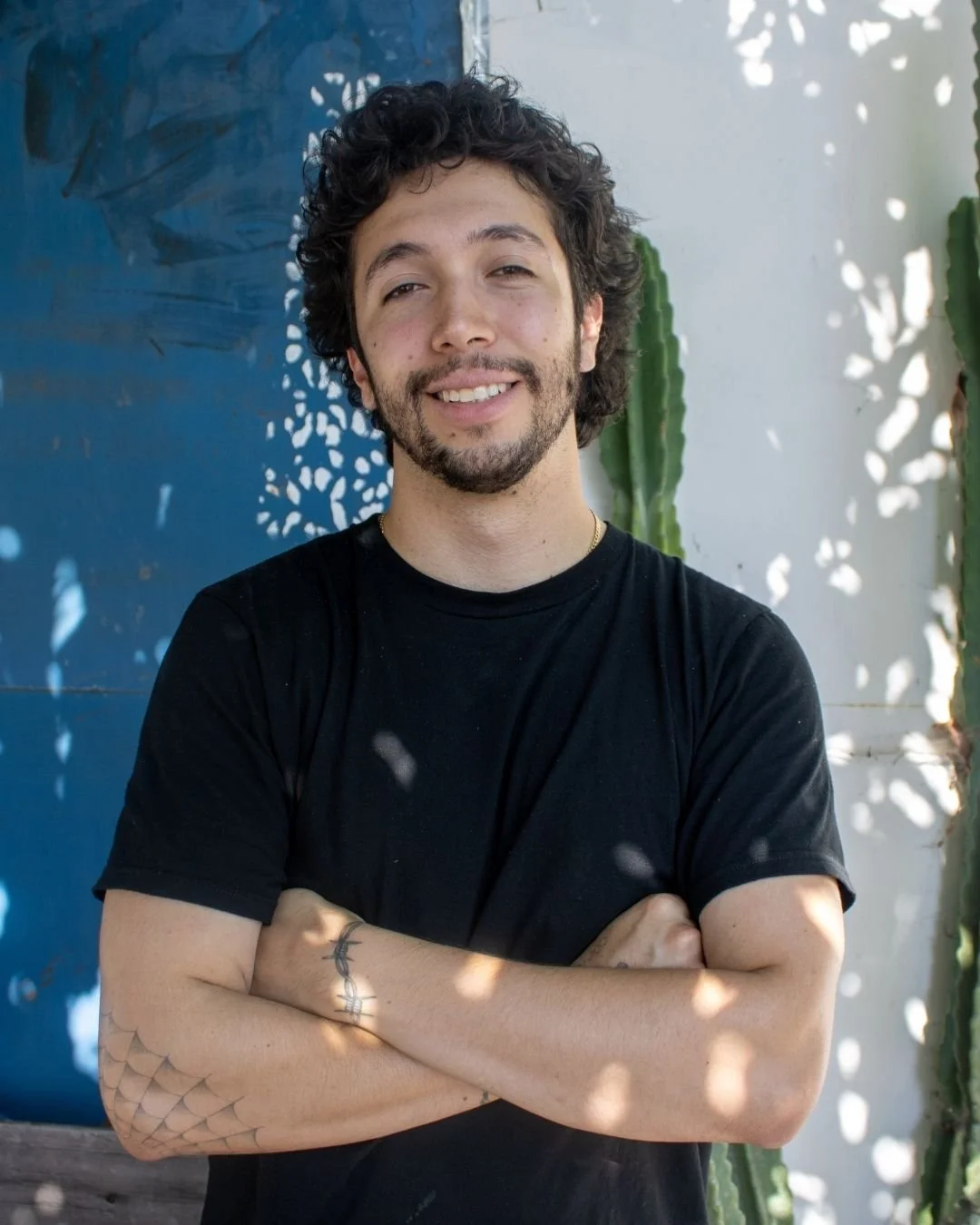
Tony Valentino
Tony Valentino created two poster designs that blend personal reflection with political resistance.
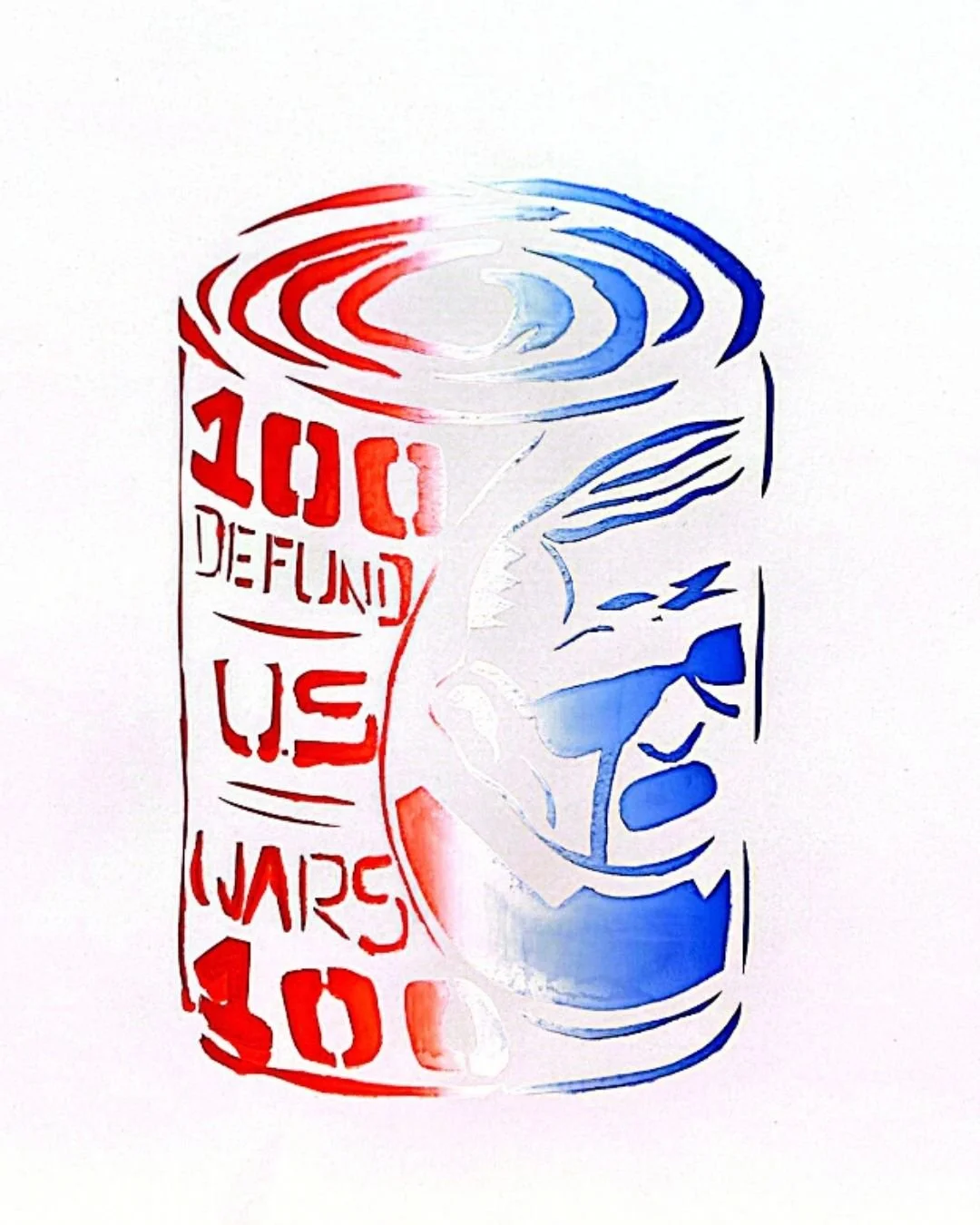
The first design, “Defund U.S. Wars”, examines how U.S. government funding decisions function as a moral contract. The artwork depicts a wad of money rolled with an elderly white man on the bill. “My intention was to be transparent [about] where money goes and how it flows through the system and doesn't go in the right direction,” Valentino explains. Drawing from his background in advertising, he critiques the persistence of the American Dream ideology to mainstream media. “This American system is ingrained within all of us from a young age,” he notes. “If you're not doing something that generates revenue, then you're not doing something properly.” Through this piece, Valentino expresses his disagreement with U.S. funding priorities, emphasizing that no one should have to hustle endlessly just to survive.
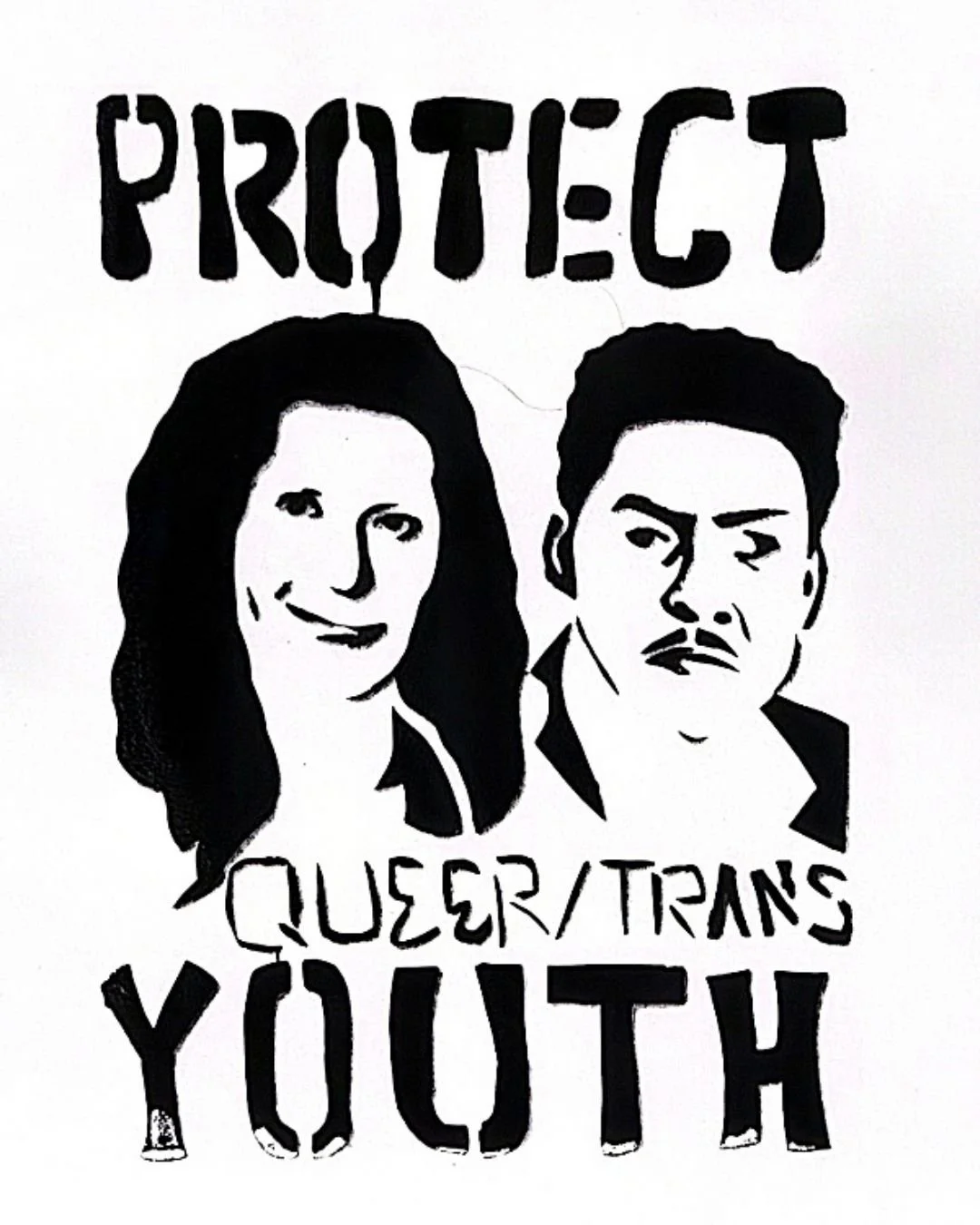
His second design, “Protect Queer/Trans Youth,” honors two queer pioneering activists: Bayard Rustin and Sylvia Rivera. Rustin, a prominent civil rights leader and mentor to Martin Luther King Jr., was a key organizer of the 1963 March on Washington. He was largely unrecognized during his life because he was openly gay. Valentino deeply admires Rustin’s resilience in the face of intense scrutiny.
Alongside Rustin is Sylvia Rivera, a Puerto Rican trans activist known for organizing trans-led mutual aid and feeding gay, trans, and queer youth in 1970s New York. As a Puerto Rican himself, Valentino relates to Rivera’s story and her elegant navigation of personal struggles, including substance abuse. Though from different eras, Valentino sees their efforts as seamlessly meshed together.
While Valentino does not identify as queer or trans, the artwork is a gesture of solidarity. The message honors his own family members and the violence they have faced, emphasizing the importance of listening and allyship.
Keiko Utsumi
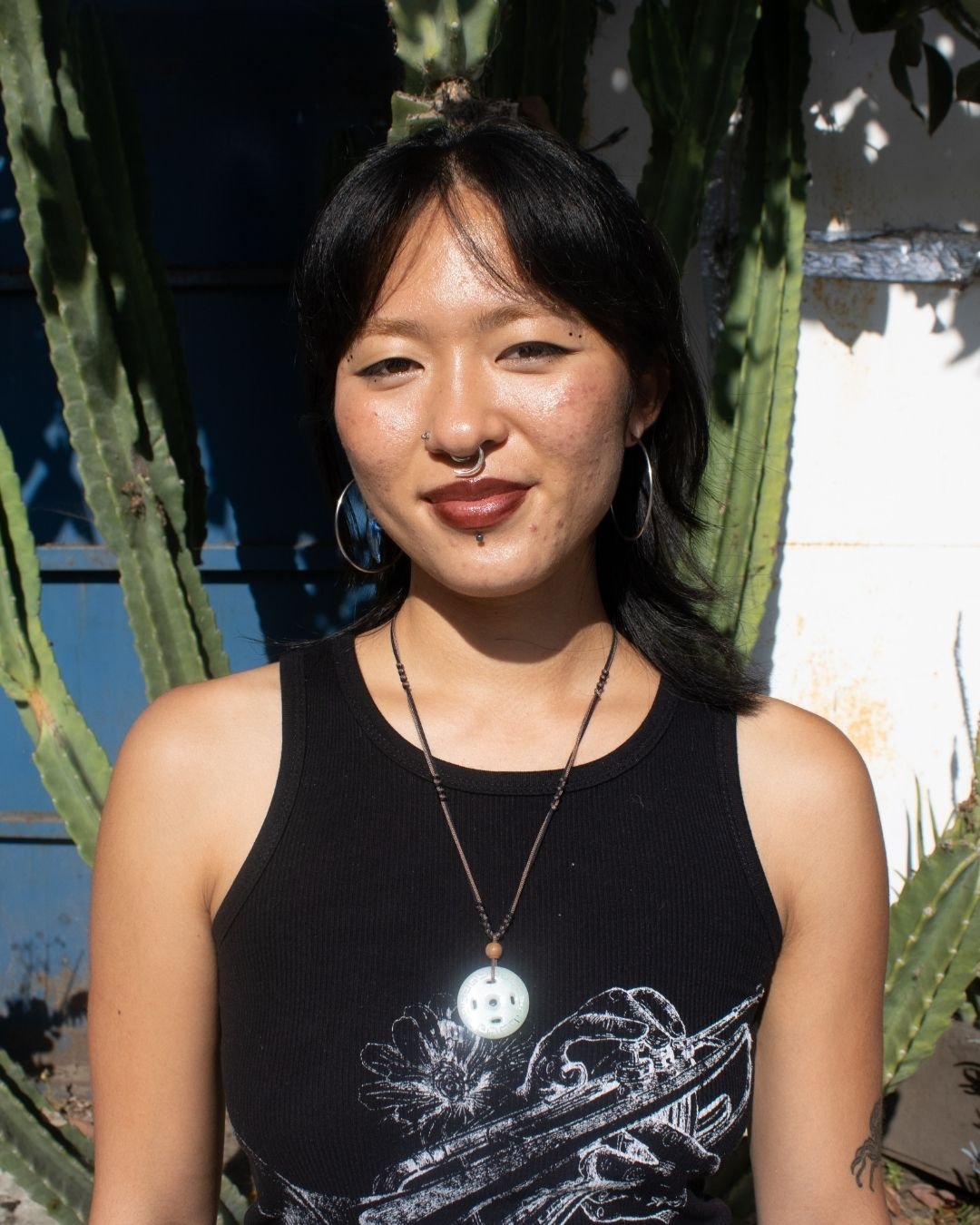
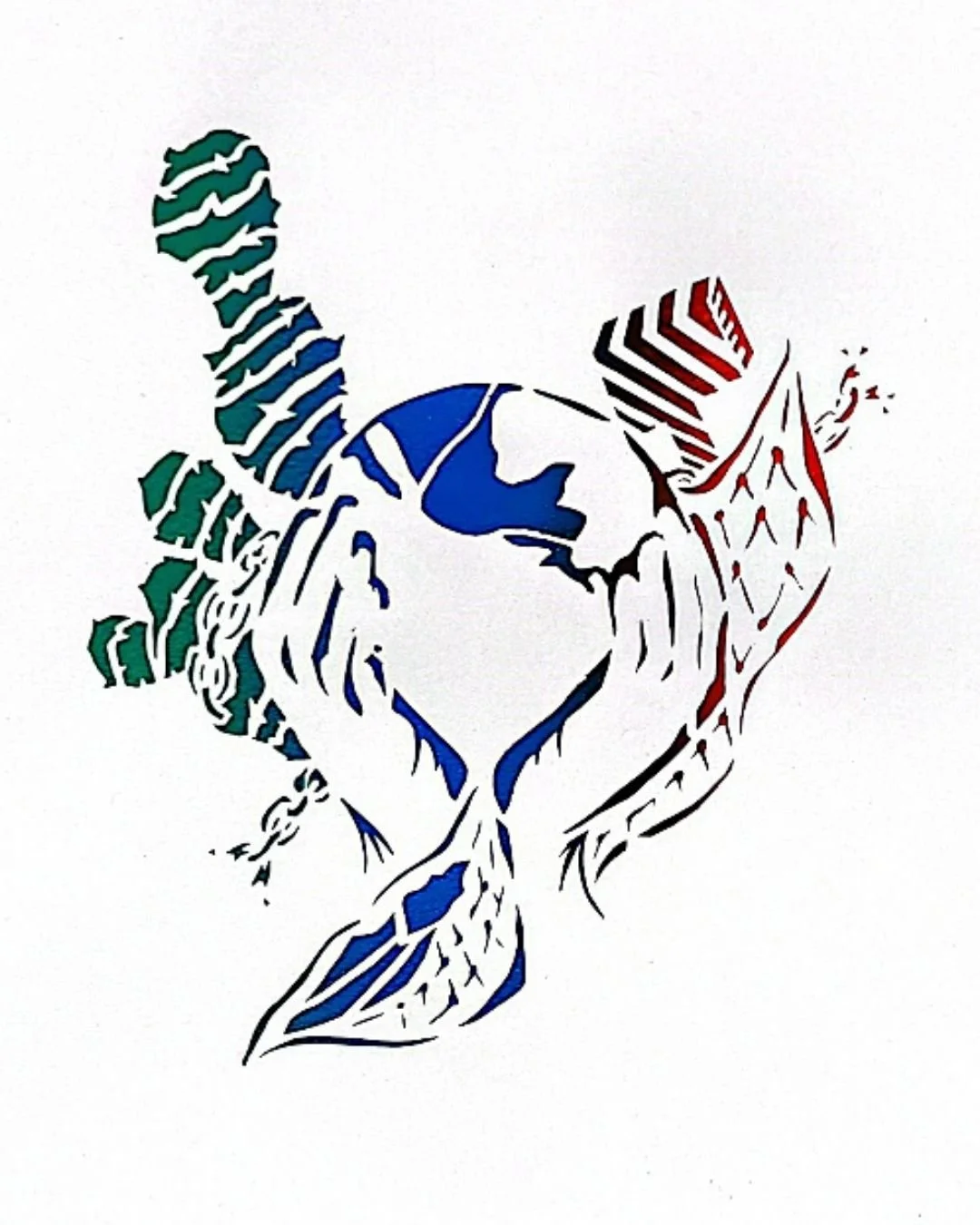
Keiko Utsumi’s poster design explores the vital theme of international solidarity. “International solidarity is essential to the struggles of all workers who hold up the world,” Utsumi notes.
The artwork references historical and contemporary themes, centering on a campesina, or farmworker. Utsumi recalls a farmworker in Northern California who told them “las campesinas levantan el pais—the farm working women raise up this country.” The design highlights how this essential labor sustains the U.S. economy, despite these workers being among the most exploited globally.
Utsumi recognizes the commonalities in global oppression, symbolized by a central globe. On the left, a cactus extends outward, honoring Mexican workers in Los Angeles and their long-term resistance to ICE, representing “both protection and resilience”. On the right side, the globe is embraced by a flowing keffiyeh, signifying Palestinian resistance.
“The workers struggle is not divorced from the Palestinian struggle against Israeli genocide”, Utsumi explains. Noting that workers manufacture and transport weapons for U.S. funded wars, Utsumi emphasizes that they also hold the power to refuse their labor. To them, the design’s breaking chains celebrates “all workers currently fighting against capitalist oppression”.
CLOSING
The seeds planted by Sister Karen and the many artists, cultural workers, and community members before us have flourished. This cohort, our 6th since the program's inception, will be the first group of artivistas to carry out their internship in our newly renovated building on 1st St. These parallel circumstances—SHG’s return to our permanent home in Boyle Heights and the continuity of our youth-led arts advocacy—convey our renewed commitment: to be a hub for art, culture, community, and social justice on the Eastside of Los Angeles.